How to Integrate Azure DevOps with Sally AI
Connect Sally AI with Azure DevOps to turn meeting insights into real work - directly in your project boards. With the Sally Azure DevOps integration you can create work items or add comments to existing ones with one click, avoid double entry, and keep your DevOps board up to date.
Quick Navigation
- How to connect Azure DevOps with Sally AI
- How to send insights to Azure DevOps
- Required OAuth Scopes
1. How do I connect Azure DevOps with Sally AI?
Follow these steps to enable the Sally Azure DevOps integration.
-
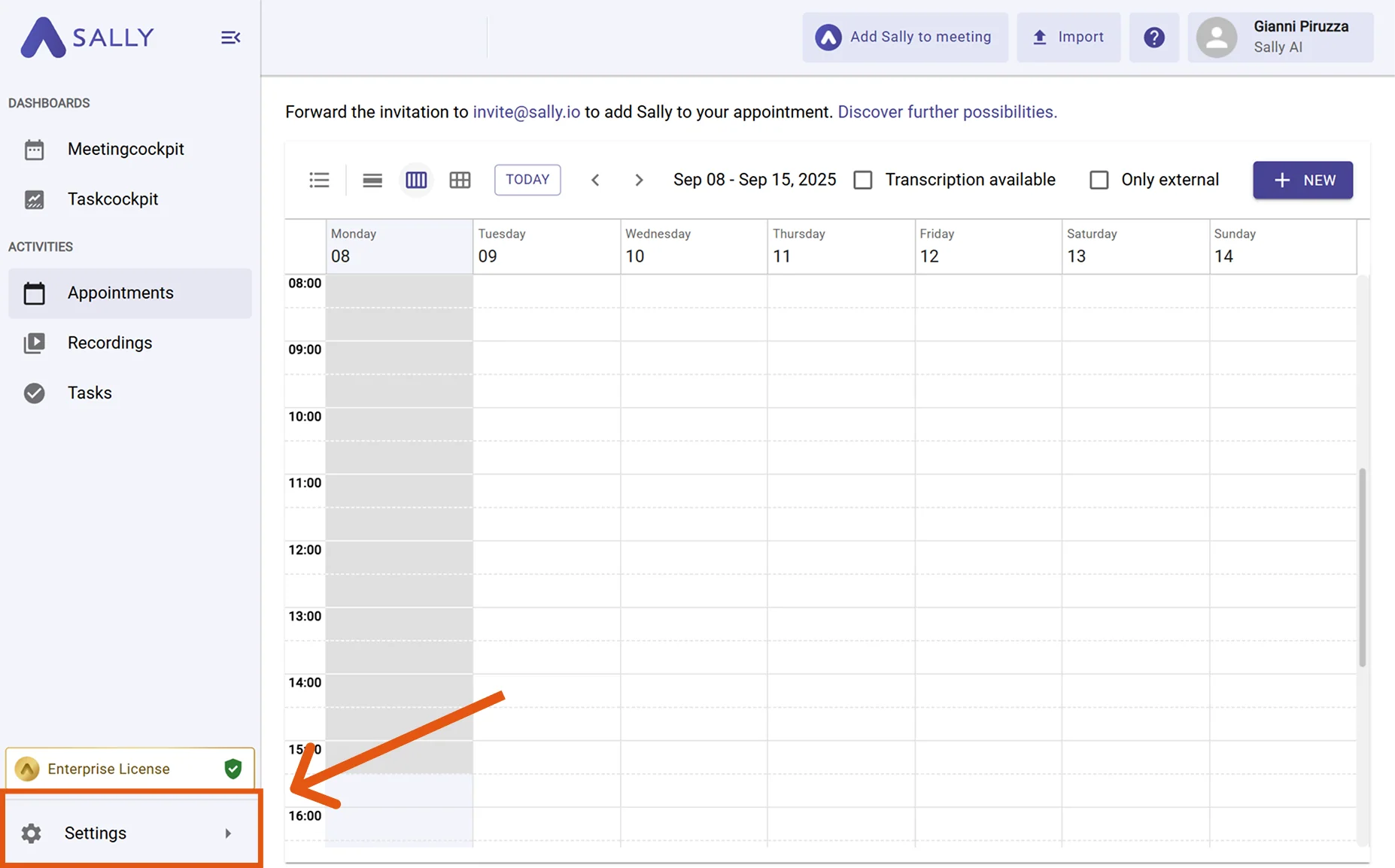
Open Settings in the left sidebar.
Figure 1: Go to Settings -
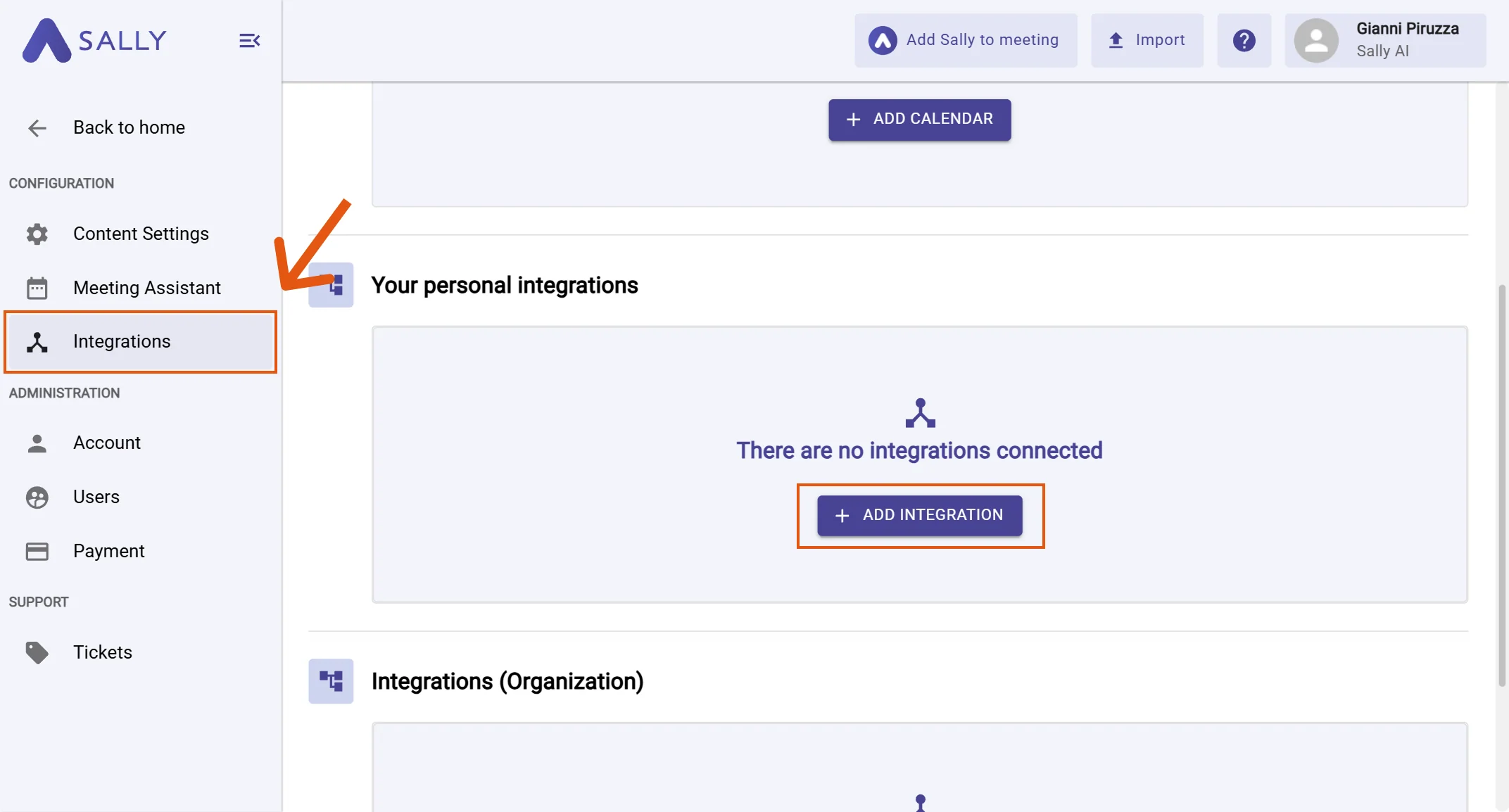
Go to Integrations and click "+ Add integration" under "Your personal integrations".
Figure 2: Add integration -
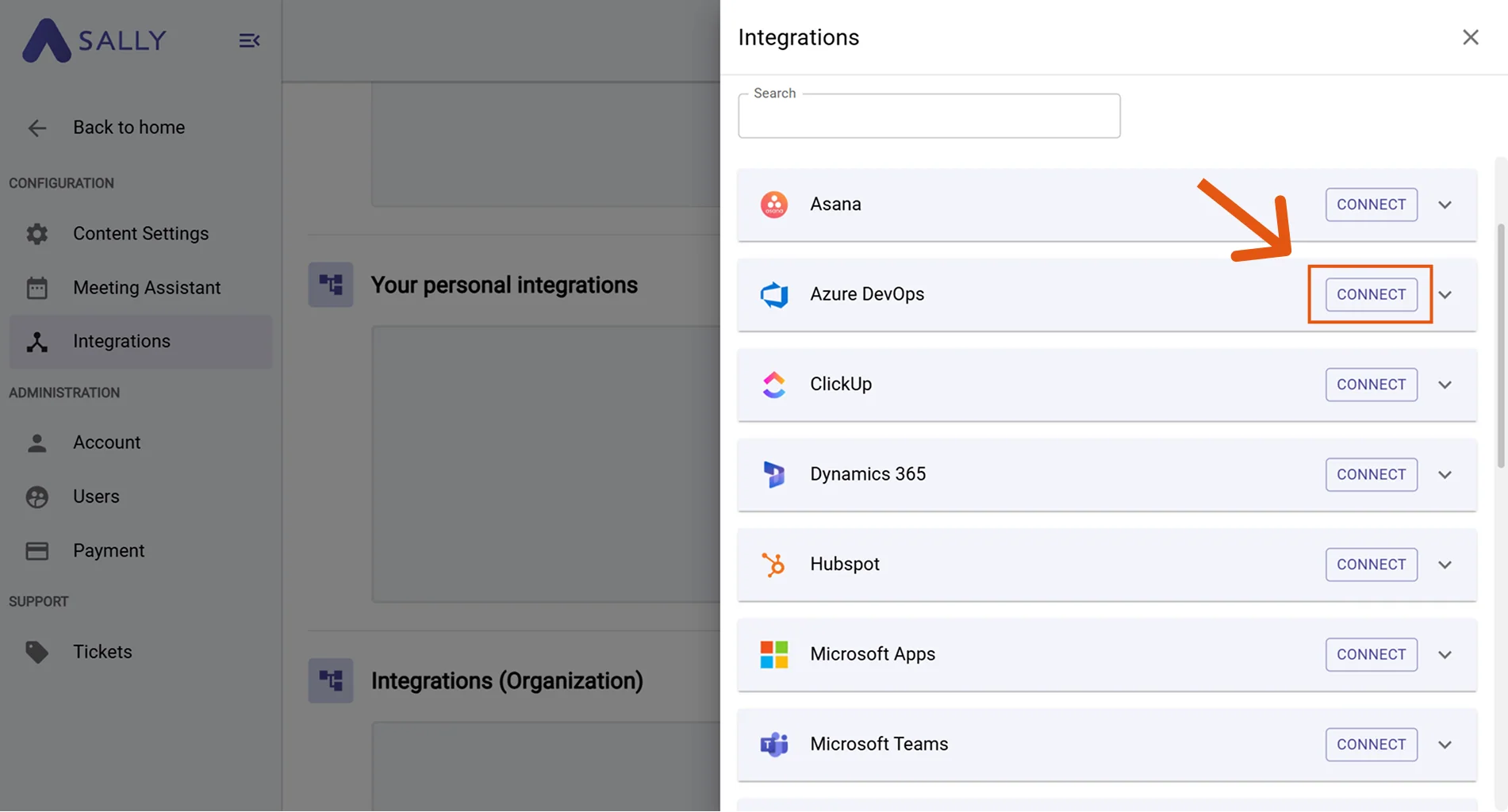
Select Azure DevOps from the list and hit Connect. Complete the OAuth flow in Azure DevOps.
Figure 3: Choose Azure DevOps → Connect
During the connection setup, Sally will ask you to enter your Azure DevOps URL.
Make sure you paste only your organization's base URL (no project/repo/path).
Example
- Full URL (to a specific PR):
https://dev.azure.com/fabrikam/ProjectX/_git/WebPortal/pullrequest/860 - What to enter in Sally:
https://dev.azure.com/fabrikam
If your URL looks like https://dev.azure.com/<org>/<project>/..., only the https://dev.azure.com/<org> part is required.
-
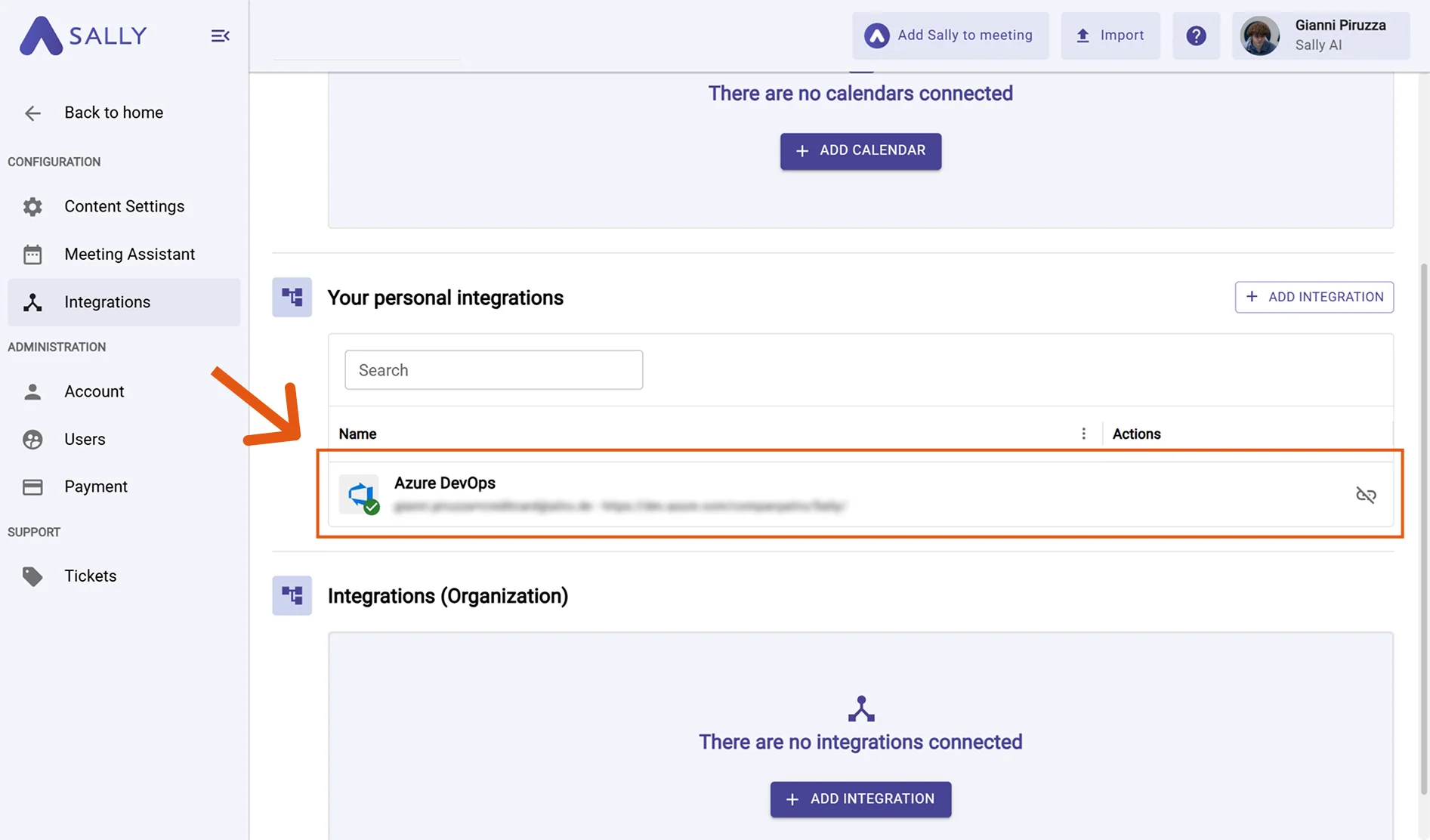
After a successful connection, Azure DevOps appears under "Your personal integrations".
Figure 4: Azure DevOps is connected
2. How do I send meeting insights to Azure DevOps?
Once Azure DevOps is connected, you can send meeting insights from Sally to Azure DevOps with a single click - so they land in the right project.
You can:
2.1. Create a work item in Azure DevOps
Turn a Sally insight into an Azure DevOps work item.
-
Open the desired meeting in Sally.
-
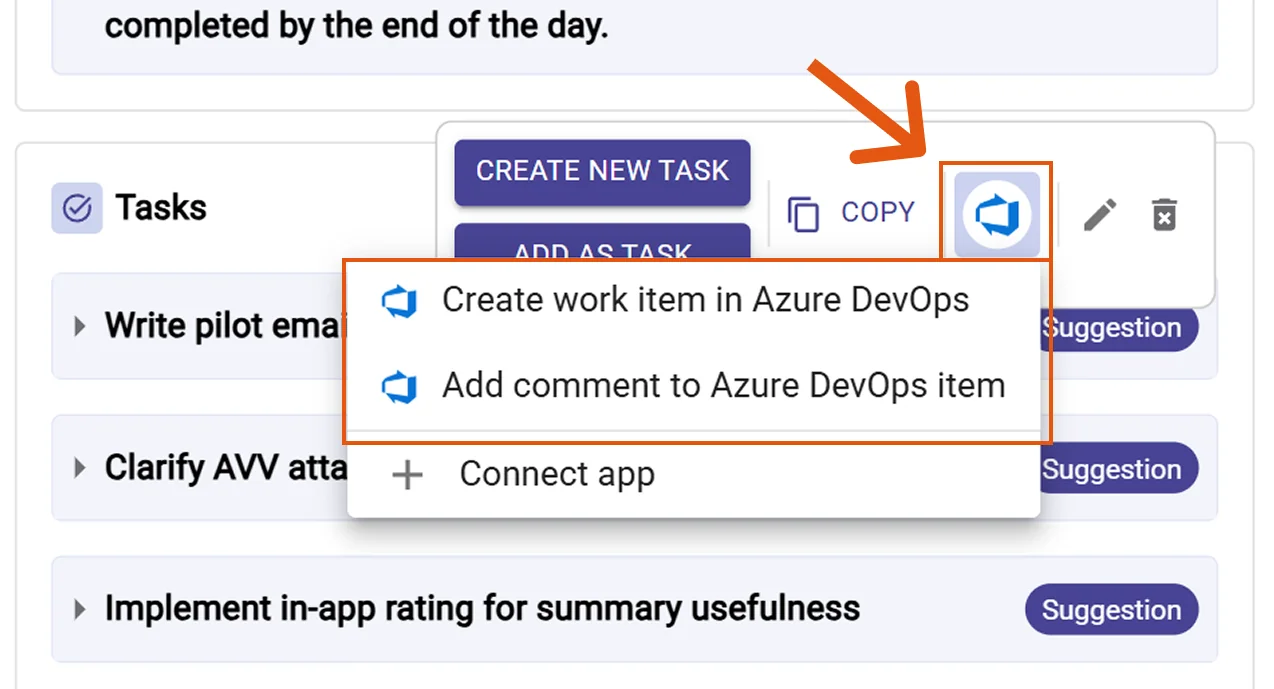
Hover any insight, decision, next step, or task in the summary, click the Azure DevOps icon, then choose “Create work item in Azure DevOps”.
Figure 5: Choose the Azure DevOps action -
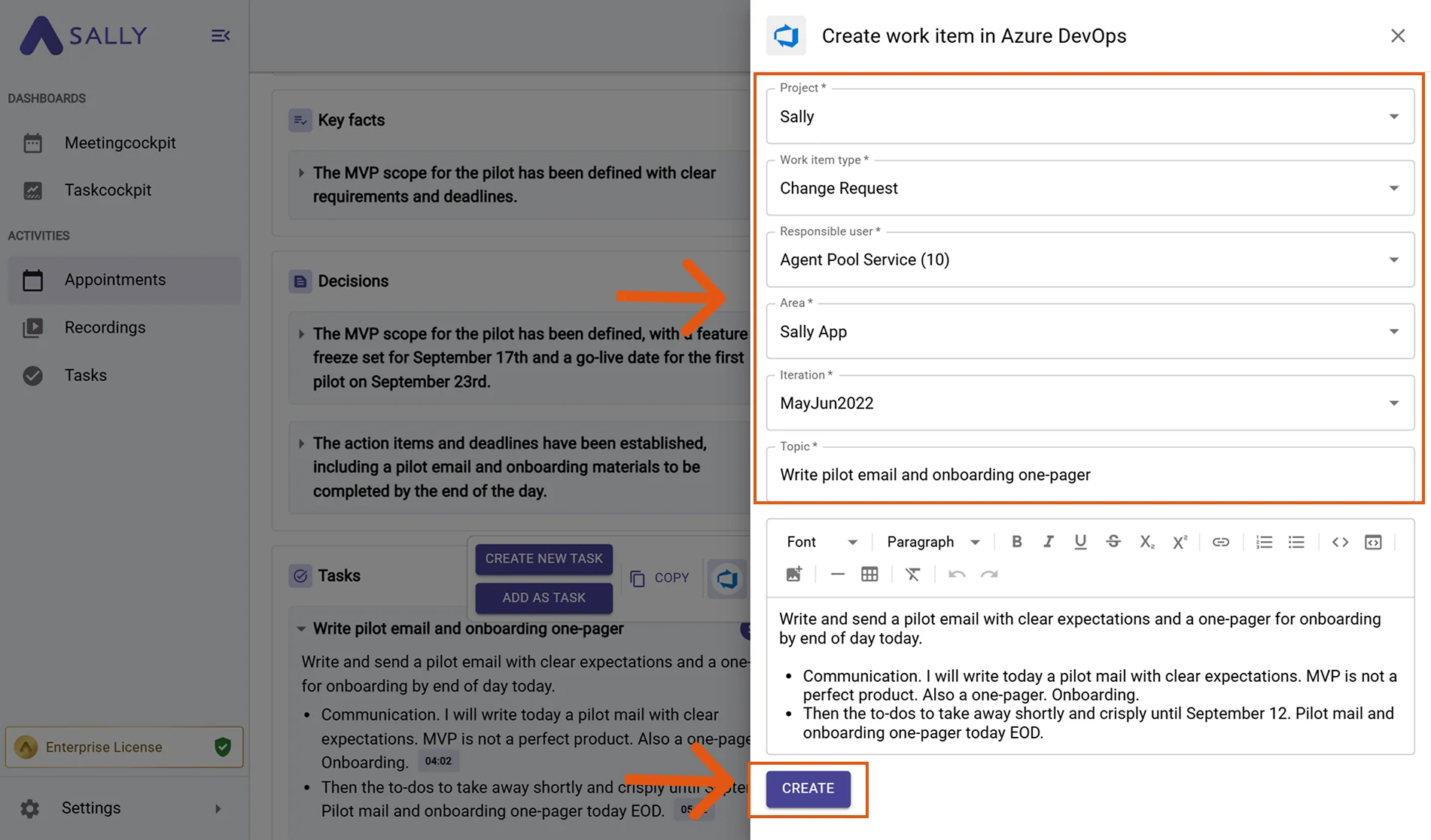
Fill in the creation form (required fields are marked with
*). For Azure DevOps this typically includes:- Project*
- Work item type* (e.g., Task, Bug, Change Request)
- Responsible user*
- Area*
- Iteration*
The title and description are prefilled from Sally and can be edited.
Figure 6: Fill the Azure DevOps fields and Create -
Click Create to send it to Azure DevOps.
2.2. Add a comment to an Azure DevOps item
Turn a Sally insight into an Azure DevOps work item.
-
Open the desired meeting in Sally.
-
Hover any insight, decision, next step, or task in the summary, click the Azure DevOps icon, then choose “Add a comment to an Azure DevOps item”.
Figure 5: Choose the Azure DevOps action -
Fill in the creation form (required fields are marked with
*). For Azure DevOps this typically includes:- Project*
- Work item type* (e.g., Task, Bug, Change Request)
- Responsible user*
- Area*
- Iteration*
The title and description are prefilled from Sally and can be edited.
Figure 6: Fill the Azure DevOps fields and Create -
Click Create to send it to Azure DevOps.
3. What OAuth scopes does the Azure DevOps integration require?
For the integration with Azure DevOps, Sally uses OAuth 2.0 for authorization. The following scopes define which areas Sally can access on behalf of the authenticated user.
-
Sally accesses this information solely to technically establish and maintain the connection to the user account.
-
Sally does not make any autonomous changes. Actions are performed exclusively upon the explicit initiative of the user.
-
API endpoints are only called within the scope of an active action initiated by the user within the platform.
Technical Overview of Required Scopes
| Scope | Type | What Microsoft technically allows with this scope | How Sally uses this scope |
|---|---|---|---|
user_impersonation | Delegated | API access in the context of the authenticated user | Part of the Azure authentication model. Sally uses this scope solely for the technical execution of the integration within the authenticated user session. |
vso.work_write | Delegated | API permission for work item objects | Technically defined within the Azure DevOps OAuth model. Sally does not independently modify existing work items outside explicitly user-initiated actions. |
vso.code_write | Delegated | API permission for repository resources | Part of the Microsoft permission model. Sally does not modify source code or independently access repositories. |
vso.project_write | Delegated | API permission for project configuration | Technically provided by Microsoft for integrations. Sally does not modify project configurations. |
vso.wiki_write | Delegated | API permission for wiki resources | Part of the OAuth model. Sally does not independently create or modify wiki content. |
vso.taskgroups_write | Delegated | API permission for task group resources | Technically required within the integration permission structure. Sally does not independently manage task groups. |
vso.memberentitlementmanagement | Delegated | Access to organization and license information | Part of Microsoft's API structure. Sally does not modify user or license configurations. |
vso.profile | Delegated | Access to user profile information | Sally reads basic profile information for authentication purposes. No profile data is modified. |
email | Delegated | Access to the user's email address | Sally reads the email address to uniquely identify the connected account. |
User.Read | Delegated | Read basic user information | Part of Microsoft Identity authentication. |
profile | Delegated | Access to basic profile data | Sally reads basic account information for identification purposes. |
openid | Delegated | OpenID Connect authentication | Secure authentication via Microsoft Identity. |
offline_access | Delegated | Issuance of long-lived access tokens | Enables a stable connection without repeated login. No Azure DevOps data is modified. |