Connect Outlook Calendar
By connecting your Outlook Calendar, Sally can automatically access your meetings (with the required permissions) and join them without needing a separate invitation.
After a successful integration, you will see all your scheduled meetings directly in the Sally platform.
Sally supports both Exchange Online (Microsoft 365, cloud-based) and Exchange On-Premise (local server environments).
- Exchange Online: Sign in with your Microsoft account – quick and easy for Microsoft 365 users.
- Exchange On-Premise: Connect by entering your server information and login credentials – for organizations running their own Exchange server.
1. Connect Outlook Calendar (Exchange Online)
1.1 Connect a work account
Here you sign in with a work, school, or university account (Microsoft 365 / Azure AD). This option is intended for organizational environments where Outlook is managed through Microsoft 365.
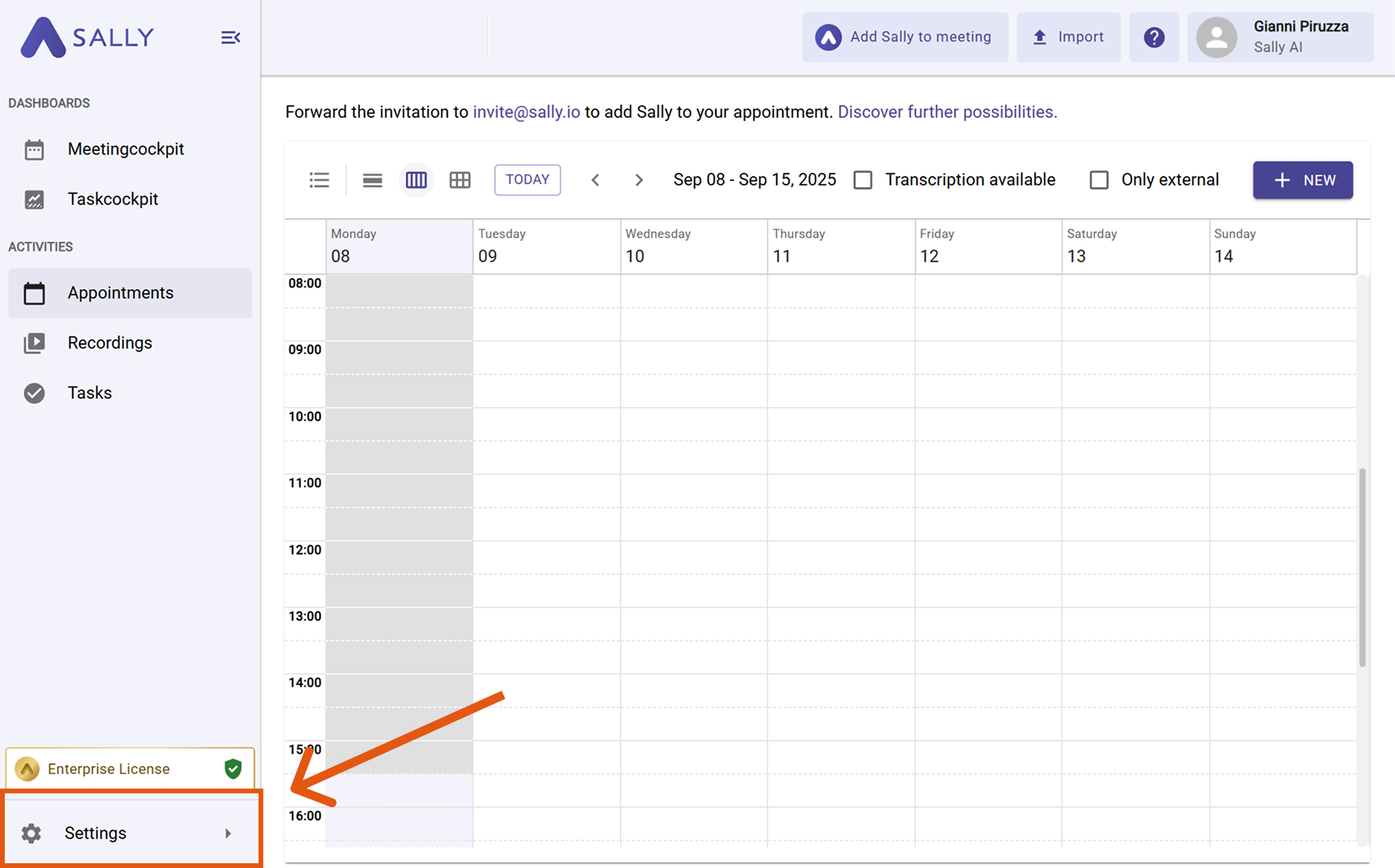
- Open Settings in the left sidebar.
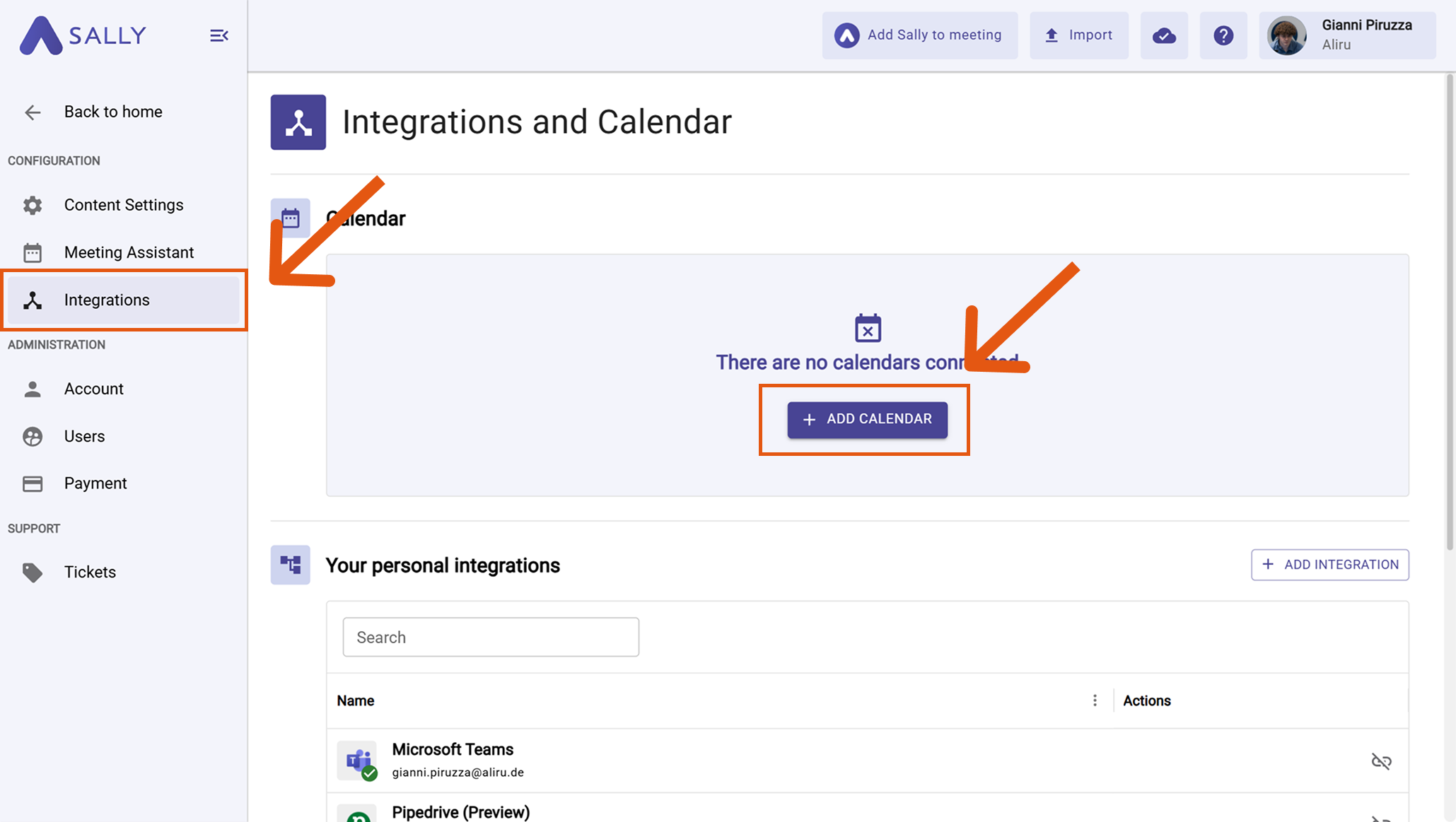
- Select “Integrations.”
- Click “+ Add calendar.”
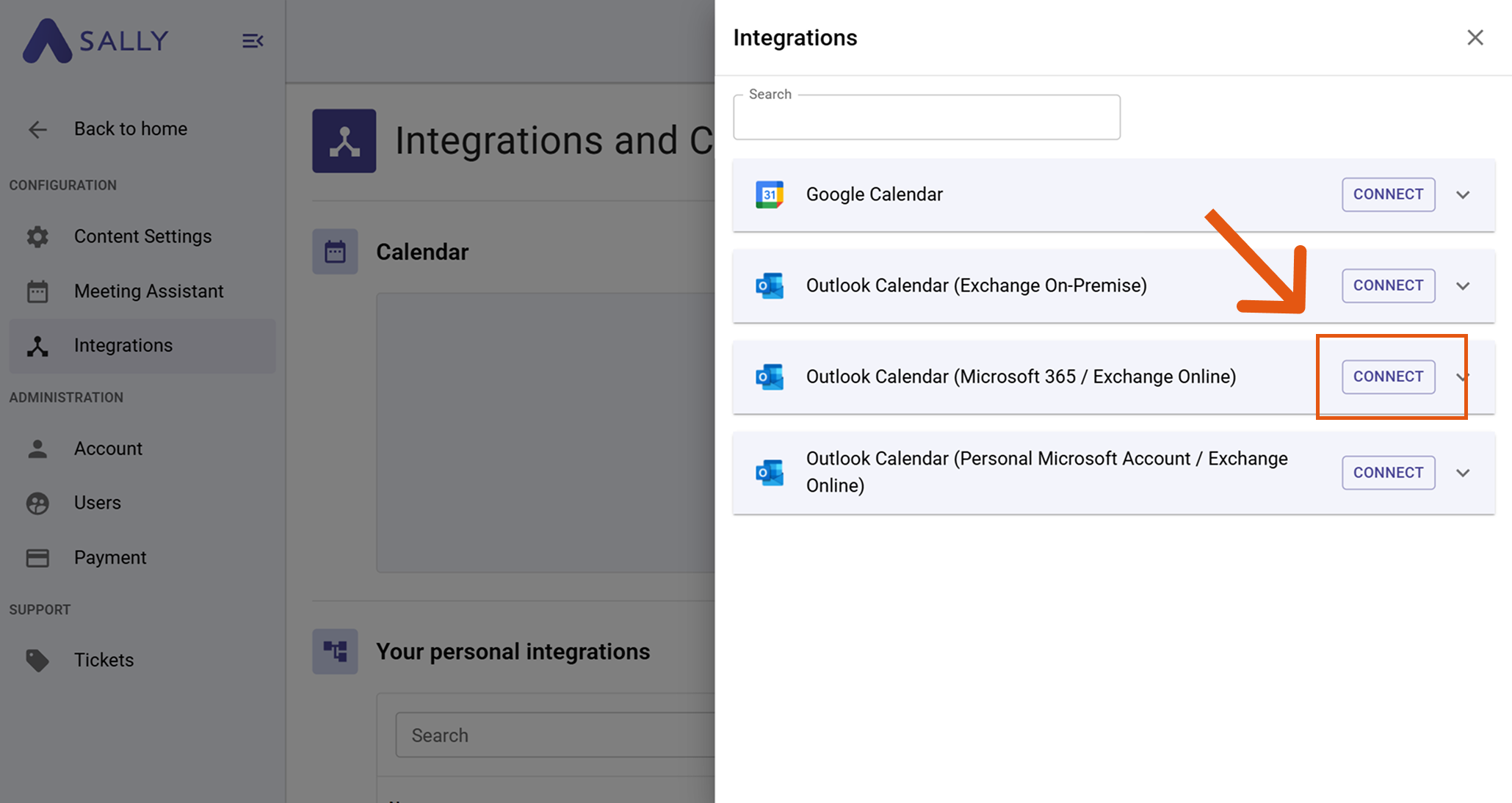
- Select “Outlook Calendar (Microsoft 365 / Exchange Online)” and click “Connect.”
- Sign in with your "Work, school, or university account" and grant the required permissions.
When connecting an Outlook calendar for the first time, an admin login is required to approve the Sally app for the tenant.
After that, all users can connect their calendars normally.
- After the connection is successful, your Outlook calendar meetings will appear in Sally.
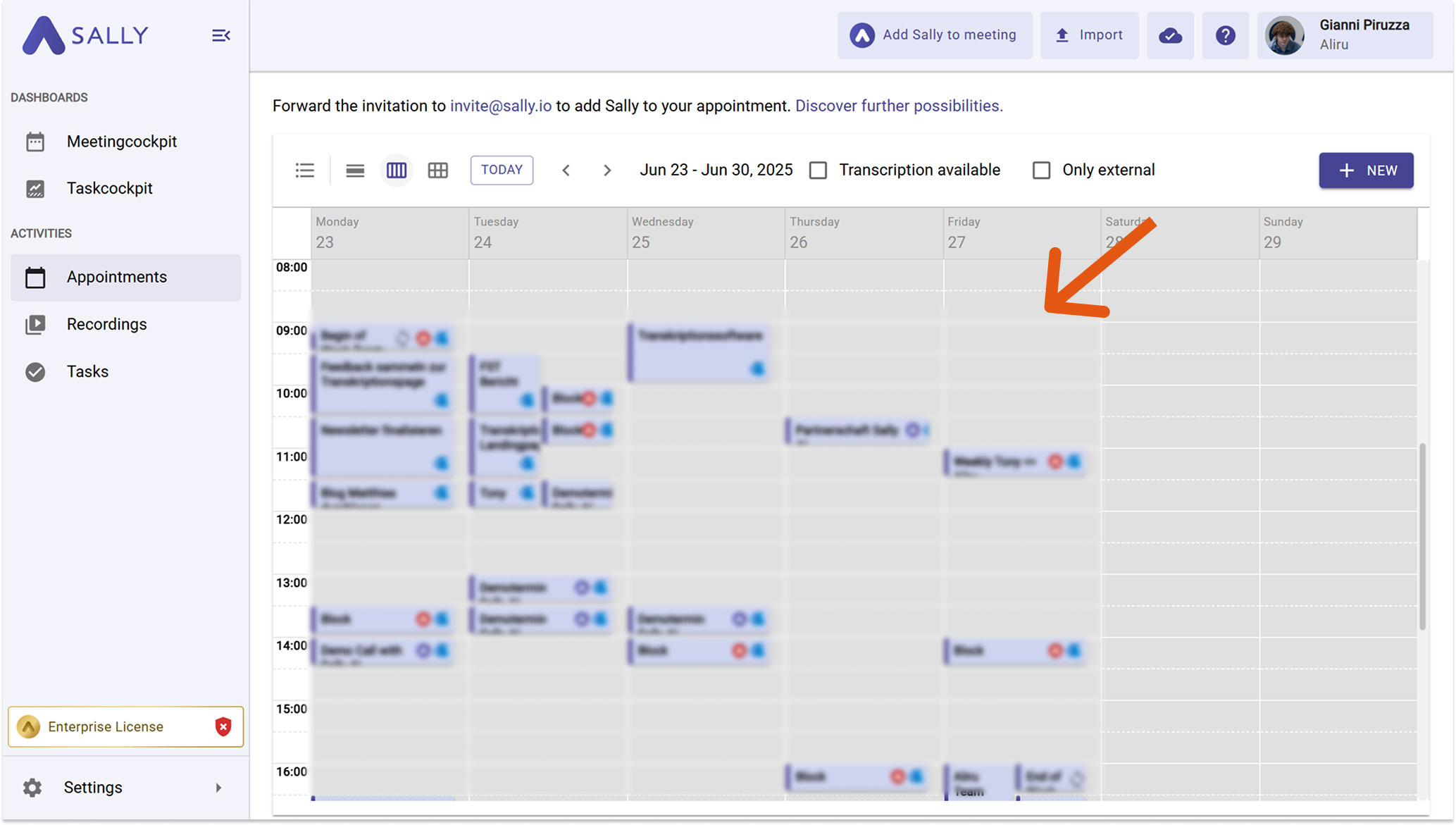
Synchronization may take a few minutes. Restart Sally if necessary.
1.1.1 Technical OAuth permissions for work accounts (Microsoft 365 / Azure AD)
For the integration with Outlook Calendar (Microsoft 365 / Exchange Online), Sally uses OAuth 2.0 for authorization.
The following scopes define which areas Sally may access on behalf of the signed-in user.
-
Sally only reads this information to technically establish and maintain the connection to the user account.
-
Sally does not perform any independent changes. Actions are only executed based on explicit user interaction.
-
API endpoints are only called within the context of an active action triggered by the user within the platform.
Technical overview of the required scopes
| Scope | Type | What Microsoft technically allows | How Sally uses this scope |
|---|---|---|---|
offline_access | Delegated | Issues a long-lived access token | Sally stores an access token to maintain the connection. No calendar data is modified. |
openid | Delegated | OpenID Connect identity verification | Sally reads the unique user ID to correctly authenticate the account. |
profile | Delegated | Access to basic profile data | Sally reads basic profile information (e.g. display name) to identify the signed-in account. |
User.Read | Delegated | Read basic user information | Sally reads basic information of the signed-in user for authentication. No changes are made to the account. |
Calendars.ReadWrite.Shared | Delegated | API permission for calendar access | This scope is technically required for Microsoft to allow the calendar integration. Sally does not create, modify, or delete calendar events. |
Contacts.ReadWrite.Shared | Delegated | API permission for contact access | Part of Microsoft's permission model. Sally does not read contact lists or modify contact data. |
OnlineMeetings.ReadWrite | Delegated | API permission for online meeting resources | Technically required by Microsoft for calendar integration. Sally does not create or modify online meetings. |
1.2 Connect a personal account
Here you sign in with a personal Microsoft account (e.g. Outlook.com, Hotmail, Live). This option is intended for private Outlook accounts.
- Open Settings in the left sidebar.
- Select “Integrations.”
- Click “+ Add calendar.”
- Select “Outlook Calendar (Personal Microsoft Account / Exchange Online)” and click “Connect.”
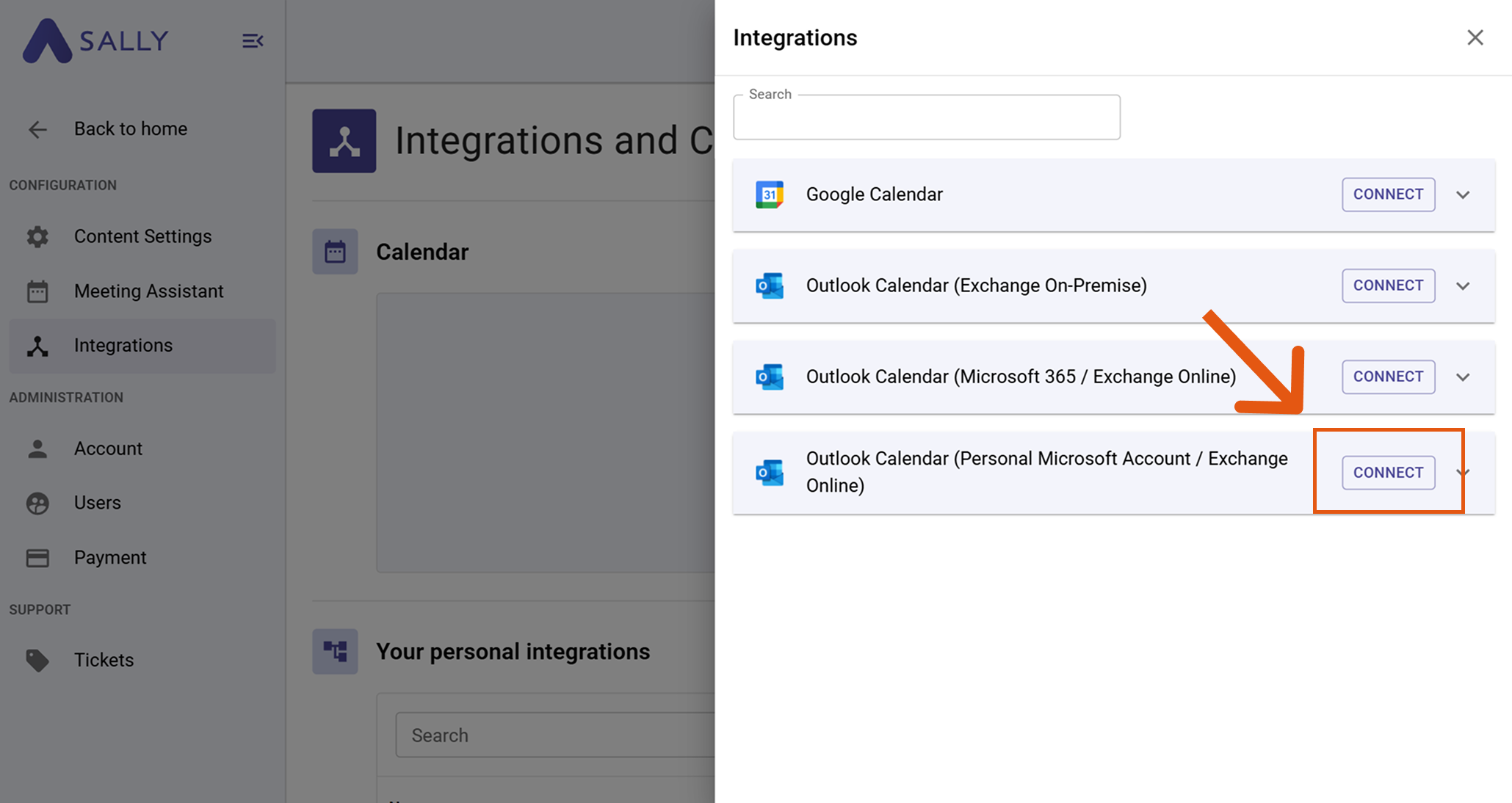
-
Sign in with your Microsoft account and grant the required permissions.
-
After the connection is successful, your Outlook calendar meetings will appear in Sally.
Synchronization may take a few minutes. Restart Sally if necessary.
1.1.2 Technical OAuth permissions for personal Microsoft accounts
For the integration with Outlook Calendar (personal Microsoft account), Sally also uses OAuth 2.0.
The following scopes define which areas Sally may access on behalf of the signed-in user.
-
Sally only reads this information to technically establish and maintain the connection to the user account.
-
Sally does not perform any independent changes. Actions are only executed based on explicit user interaction.
-
API endpoints are only called within the context of an active action triggered by the user within the platform.
Technical overview of the required scopes
| Scope | Type | What Microsoft technically allows | How Sally uses this scope |
|---|---|---|---|
email | Delegated | Access to the user’s email address | Sally reads the email address to uniquely identify the account. |
offline_access | Delegated | Issues a long-lived access token | Sally stores an access token to maintain the connection. |
openid | Delegated | OpenID Connect identity verification | Sally uses this scope to securely authenticate the account. |
User.Read | Delegated | Read basic user information | Sally reads basic information of the signed-in user for authentication. |
Calendars.ReadWrite | Delegated | API access to calendar data | This scope is technically required for the calendar integration. Sally does not independently modify calendar events. |
Contacts.ReadWrite | Delegated | API access to contact data | Part of Microsoft's permission model. Sally does not read contact lists or modify contact data. |
2. How to connect Outlook Calendar (Exchange On-Premise)
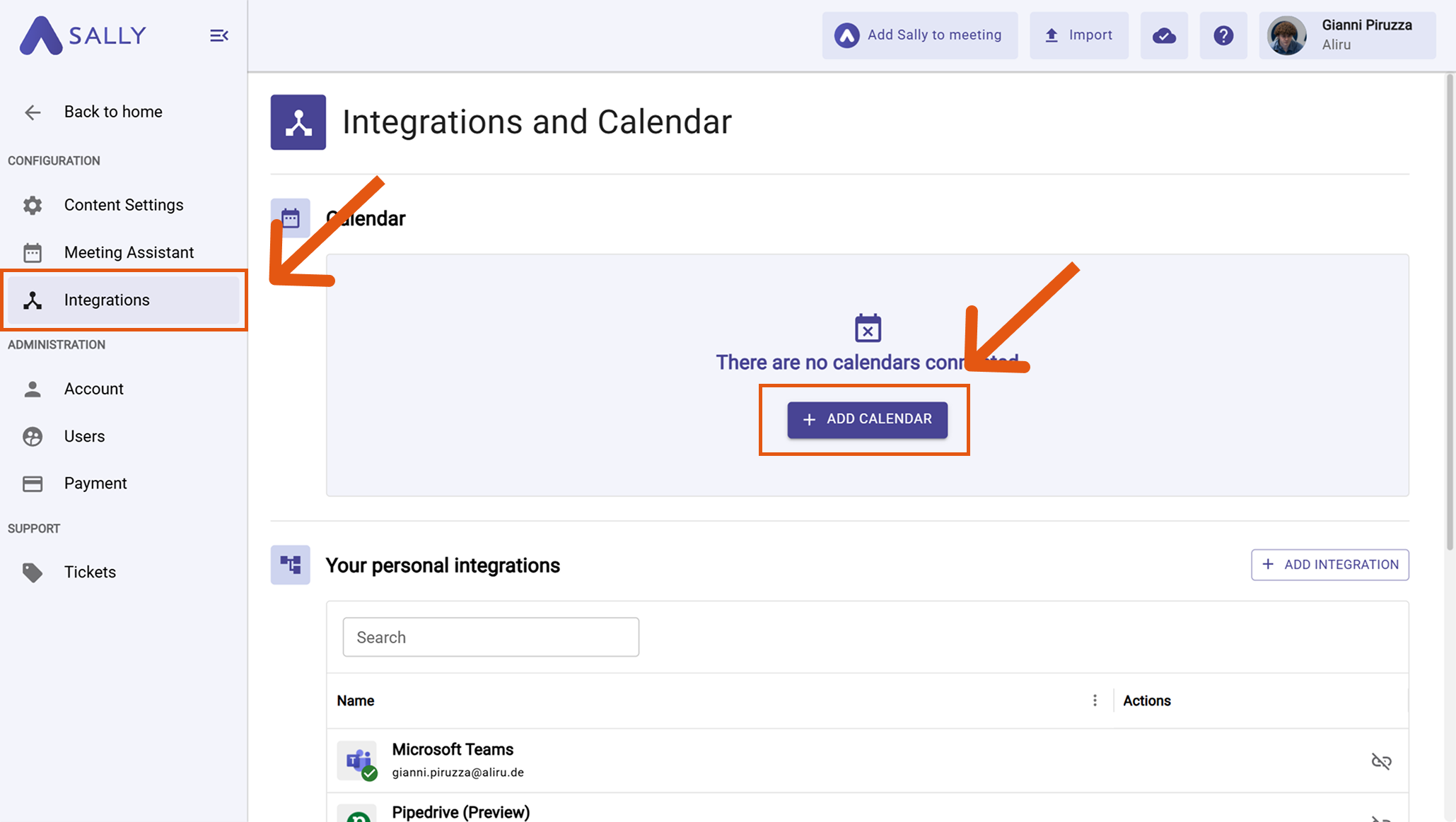
- Open Settings in the left sidebar.
- Select Integrations.
- Press + Add Calendar.
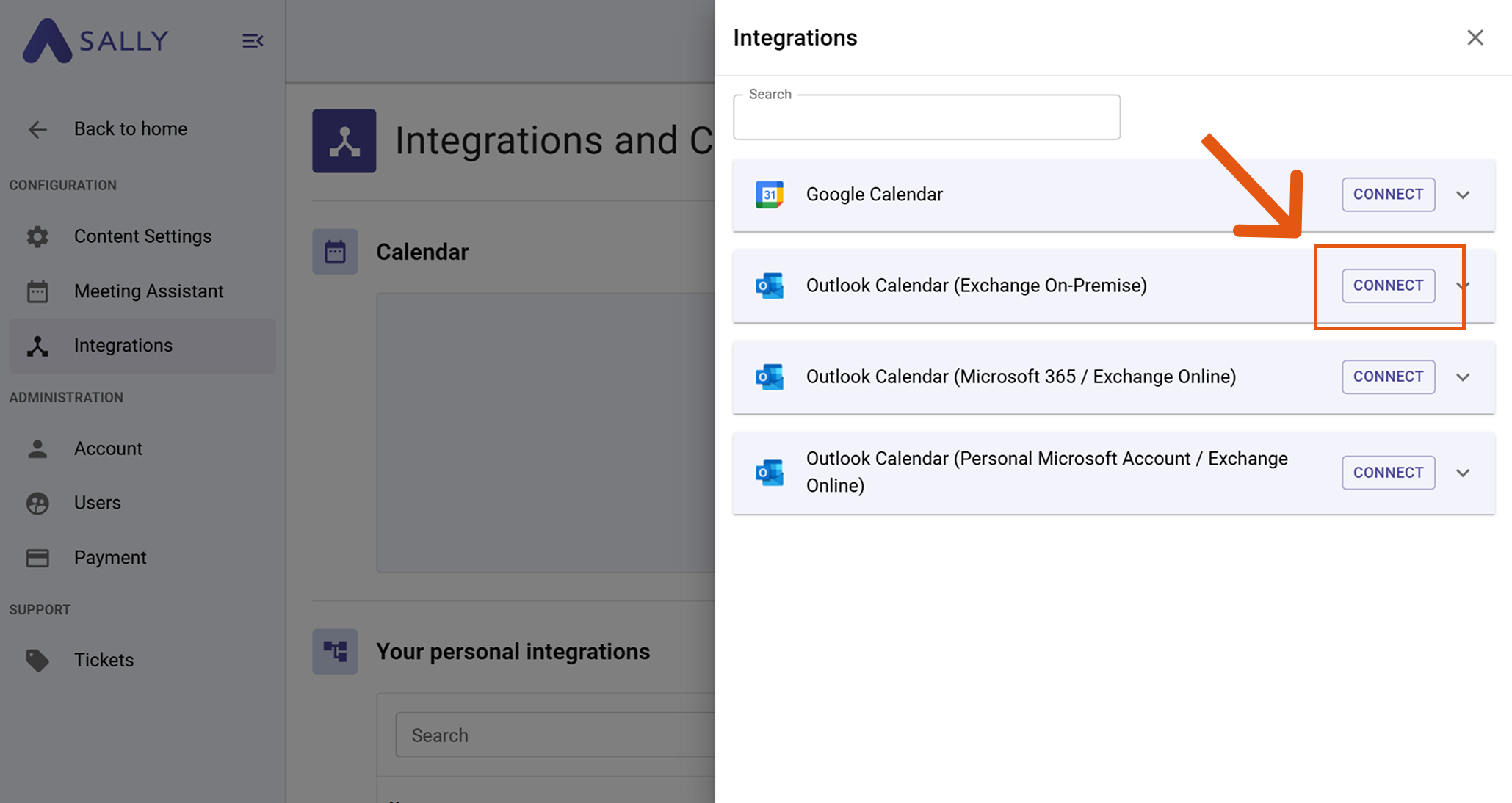
- Choose Outlook Calendar (Exchange On-Premise) and click Connect.
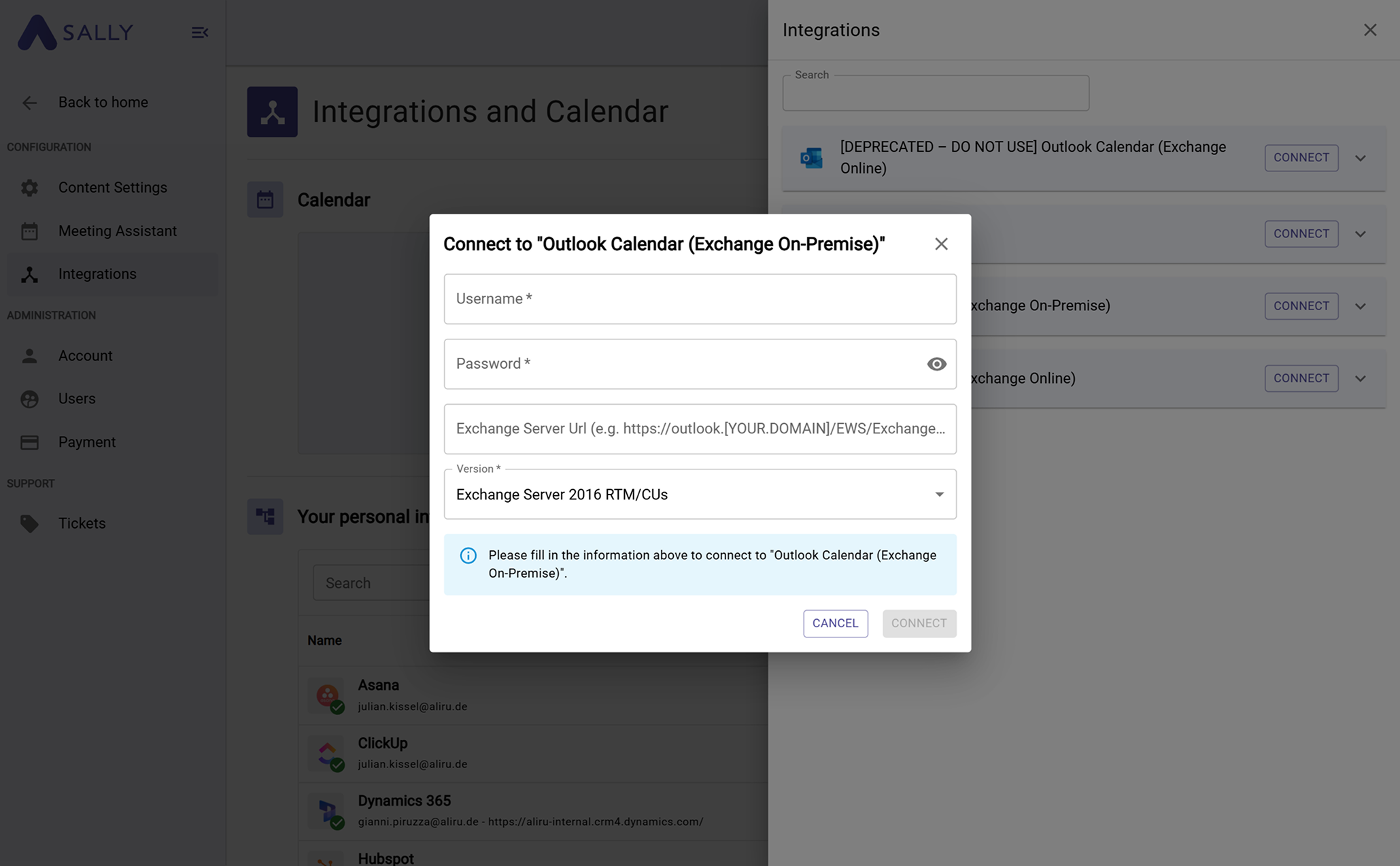
- Enter your login data and server information:
- Username
- Password
- Exchange Server URL
- Version
An Exchange Server URL often looks like this:
https://outlook.yourcompany.com/EWS/Exchange.asmx
You usually receive this information from your internal IT department.
- Once connected, your Outlook On-Premise events will appear in Sally.
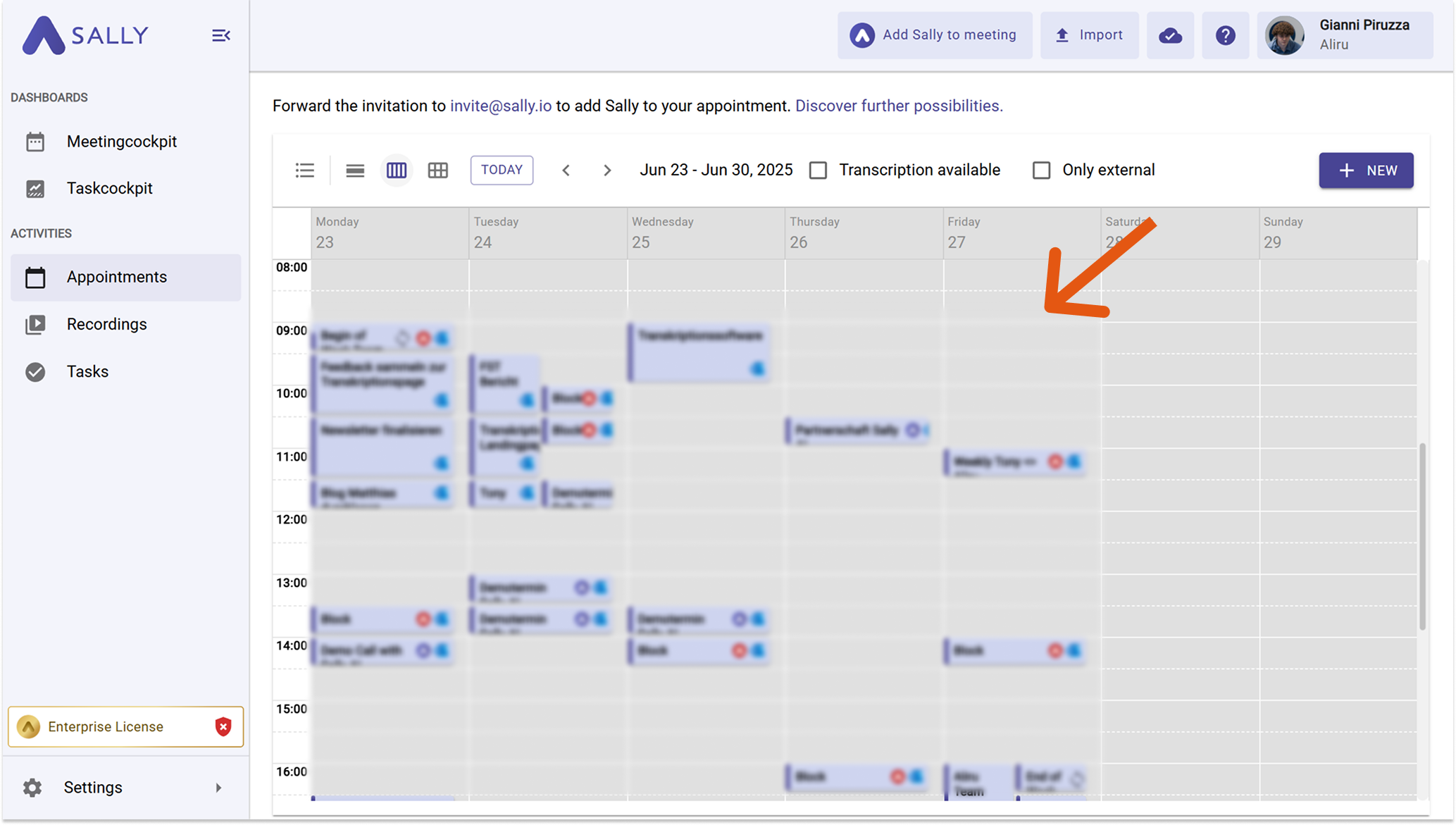
Synchronization may take a few moments. Restart Sally if necessary.
Once successfully connected, you now can set whether and when Sally should automatically join your meetings.