Adjust transcript
Editing a transcript is more than just correcting typos. You can structure content, correctly assign speakers, adjust timestamps, or selectively add or remove text blocks. This ensures that your transcript accurately reflects the conversation and is easy to read.
Quick navigation:
- Open transcript
- Edit transcript
2.1 Edit text directly
2.2 Add or delete text blocks
2.3 Split text blocks
2.4 Edit timestamps
2.5 Reassign speakers
2.6 Change transcript language - Review and finalize
1. Open transcript
Here’s how to access the transcript you want to edit:
- Open the relevant meeting in Sally.
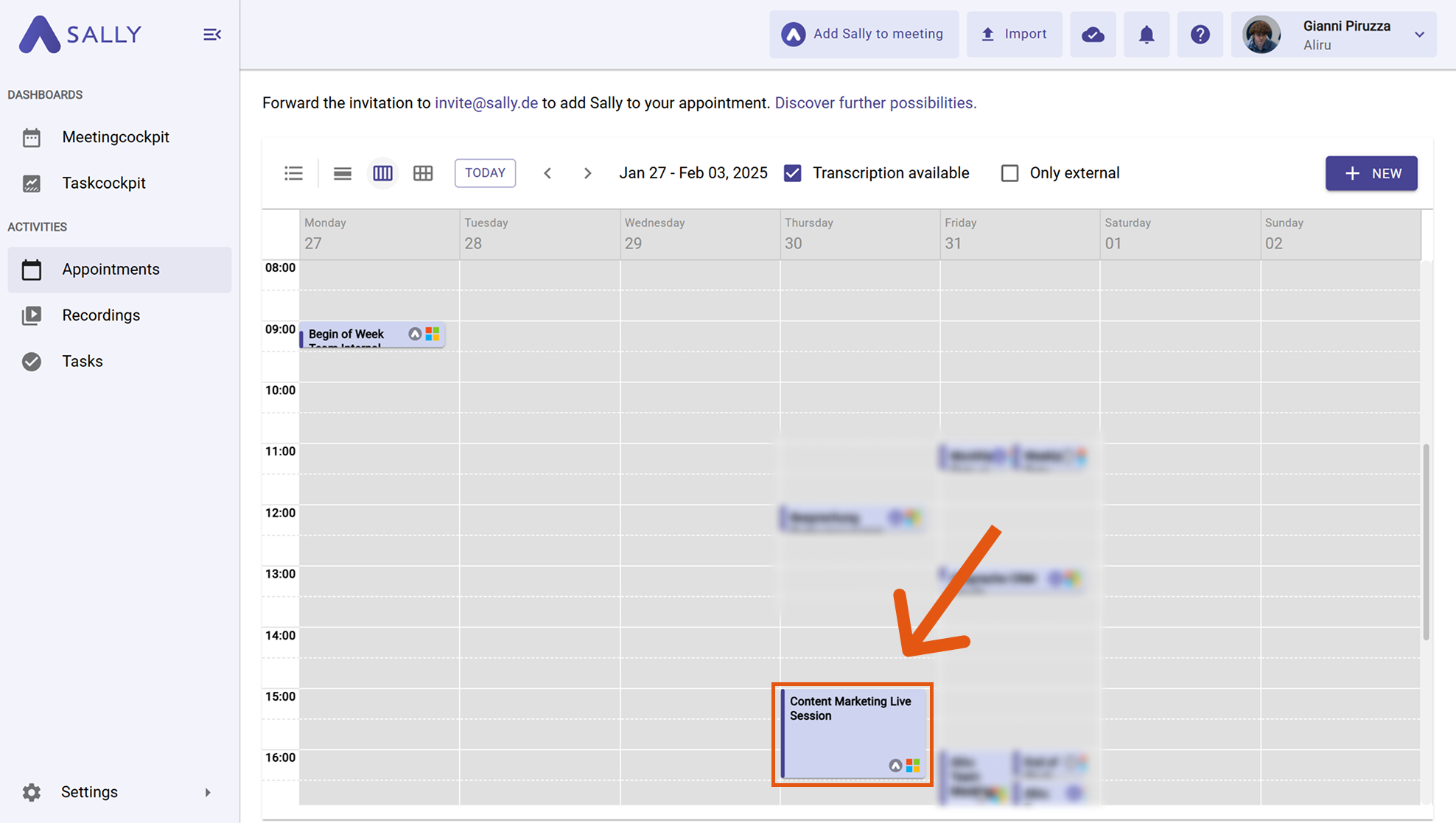
- On the right-hand side, switch to the Transcript tab. The complete transcript opens in the right-hand bar.
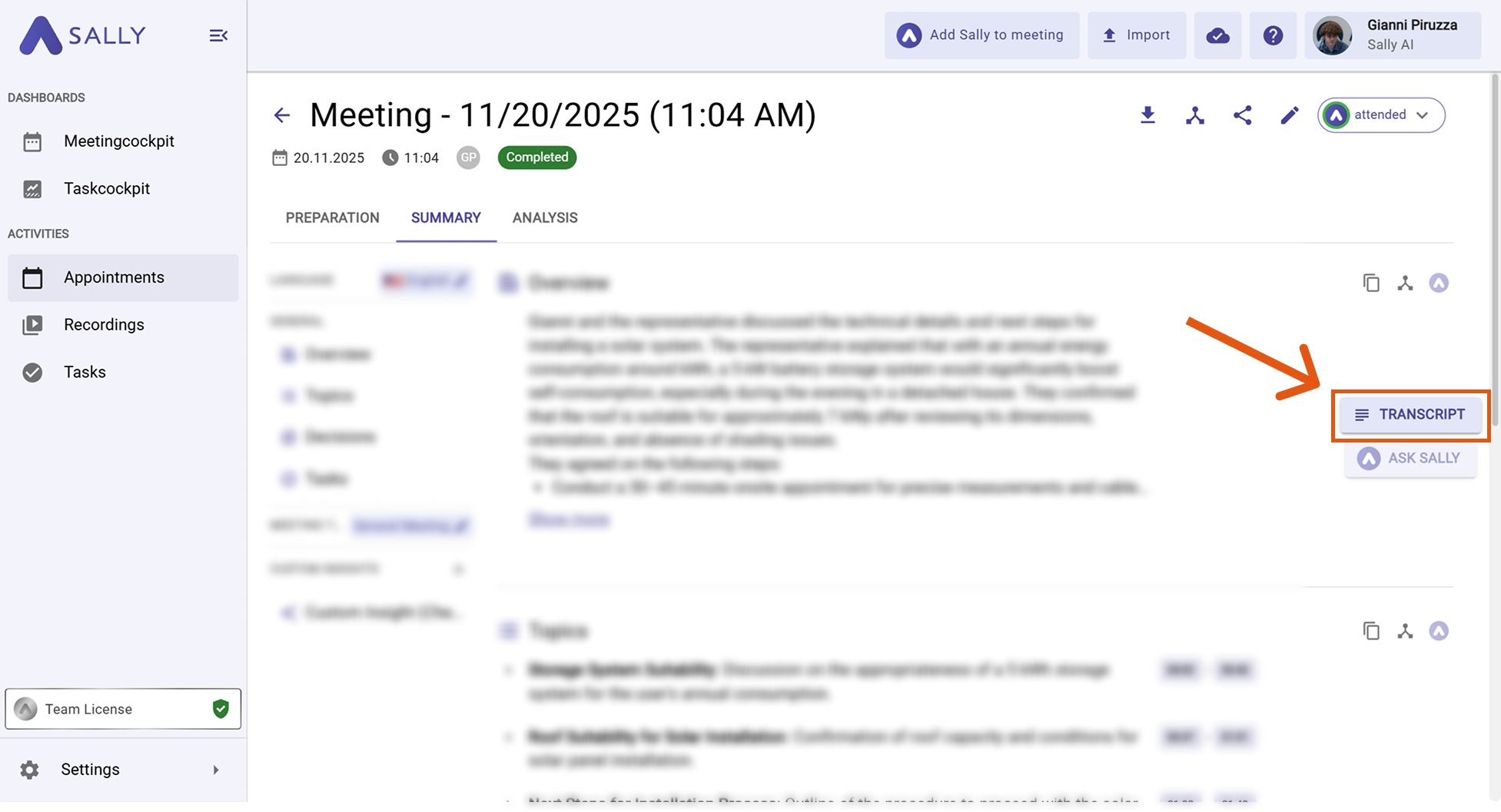
If you want to edit the transcript of an imported file, you can do so in the "Recordings" tab — without opening a meeting.
2. Edit transcript
The transcript provides several editing options that allow you to adjust content, structure, and speaker assignments. All changes are saved automatically as soon as you leave the text field or click elsewhere.
2.1 Edit text directly
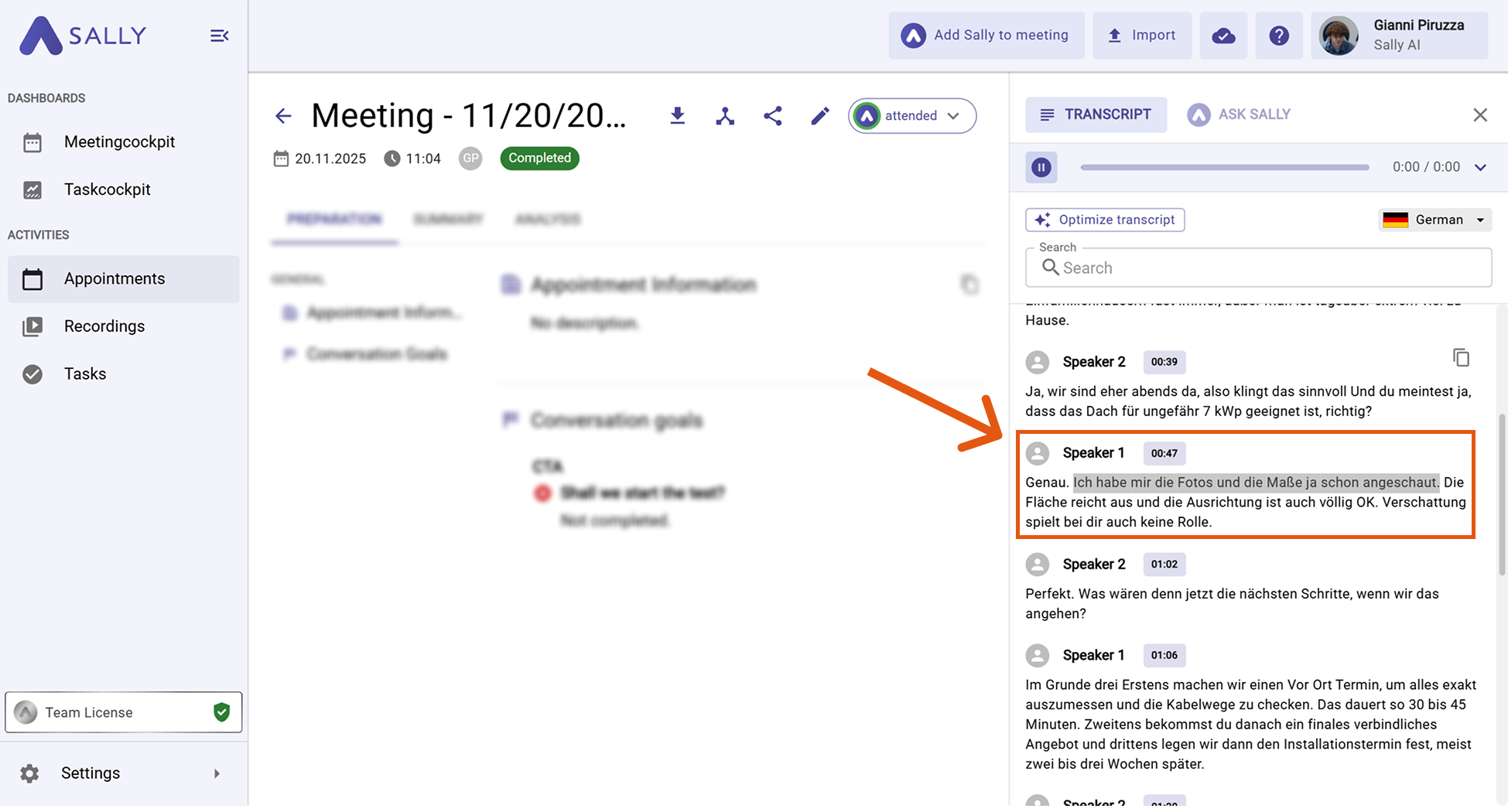
This function allows you to manually correct or rephrase the content of a text block — for example, if words were recognized incorrectly or sentences sound awkward.
How to edit text directly:
- Select the text you want to edit.
- Modify the text directly in the field.
2.2 Add or delete text blocks
You can add or remove text blocks to better structure the transcript or to add missing content.
How to add or delete text blocks:
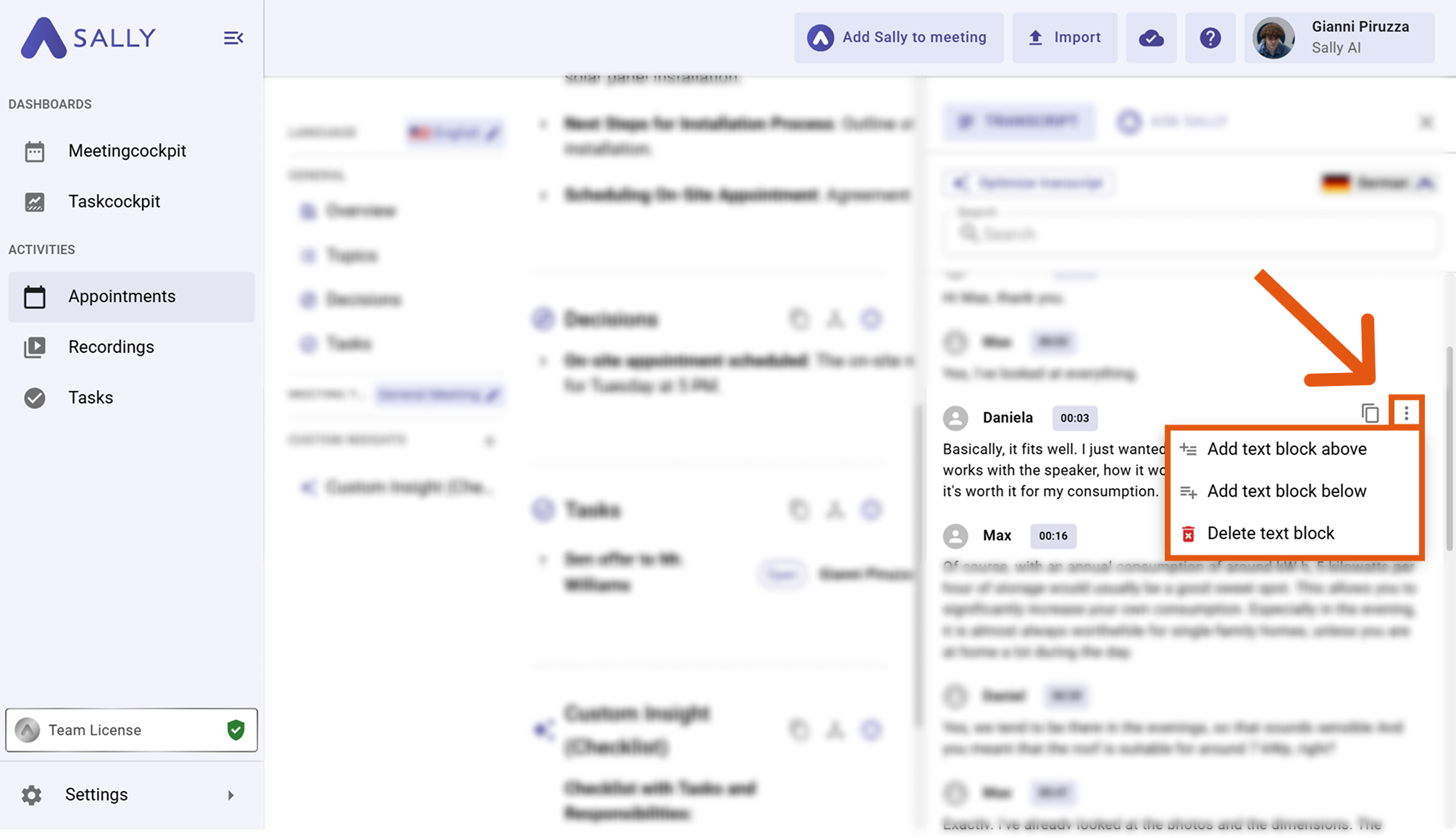
- Click the three-dot menu in the relevant text block.
- Choose one of the following options:
- Add text block above
- Add text block below
- Delete text block
Depending on your selection, a new block will be inserted above or below the selected text block. You can freely edit it and assign a speaker.
If you select “Delete text block”, the block will be removed completely.
2.3 Split text blocks
Long or content-heavy statements can be split into multiple text blocks. This improves readability and is especially useful when individual sentences should be assigned to different speakers.
How to split a text block:
- Select the text that should be split.
- Click the split icon to divide the text block.
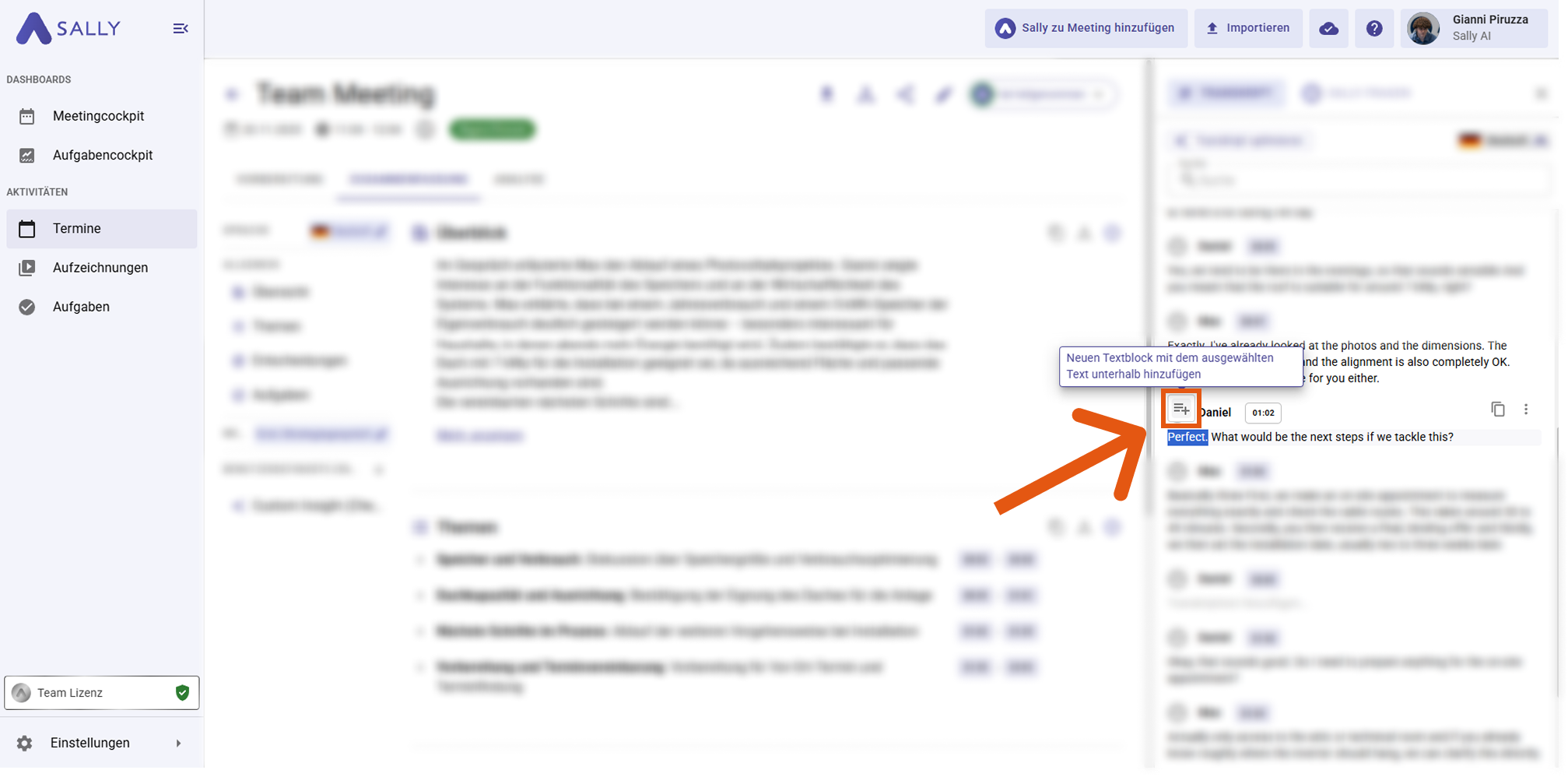
- The selected text will be moved into a new, separate text block below the original one.

2.4 Edit timestamps
Each text block includes a timestamp. You can adjust it if the timing in the transcript is incorrect or needs to be more precise.
How to edit a timestamp:
- Click the text block whose timestamp you want to edit.
- Click the timestamp of the selected text block.
- Adjust the timestamp manually.
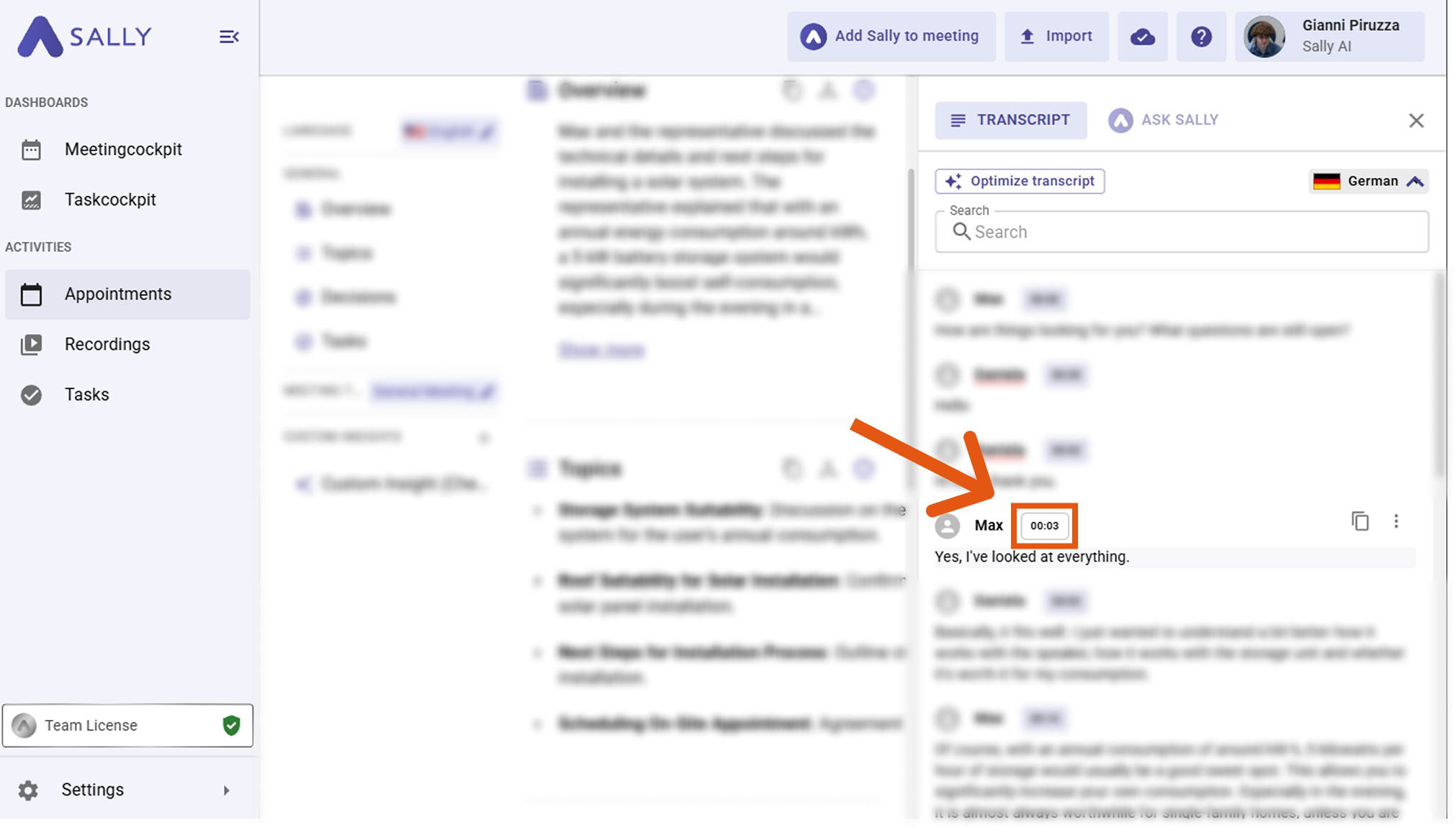
When you click the adjusted timestamp, the audio or video recording will automatically jump to the corresponding position.
Please note that the timestamp cannot be edited unless the text block is selected first.
2.5 Reassign speakers
If a text block was assigned to the wrong speaker — for example due to overlapping speech — you can manually correct the speaker.
To reassign a speaker:
-
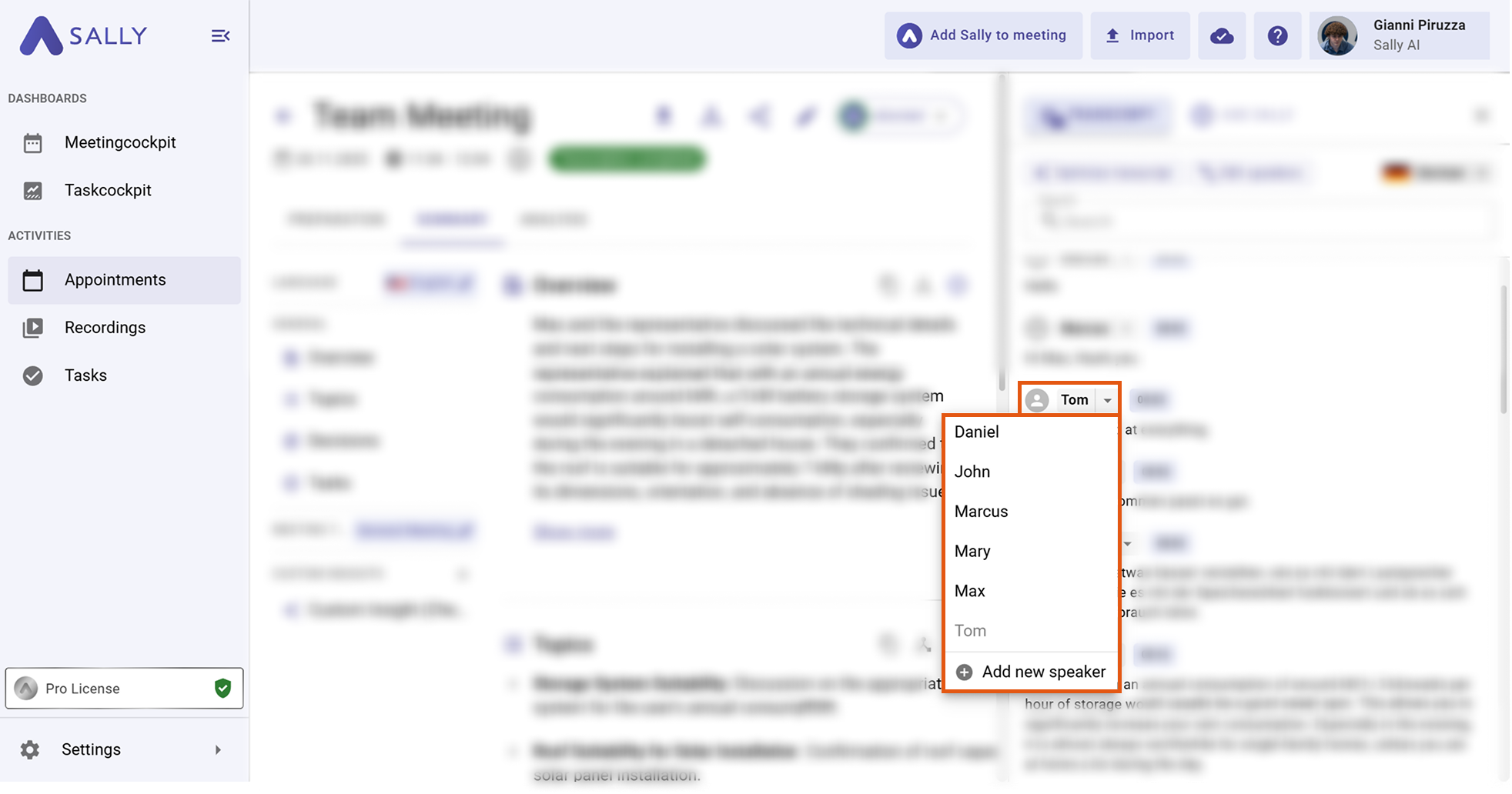
Click the dropdown next to the speaker’s name within the text block.
-
Select the correct name from the list.
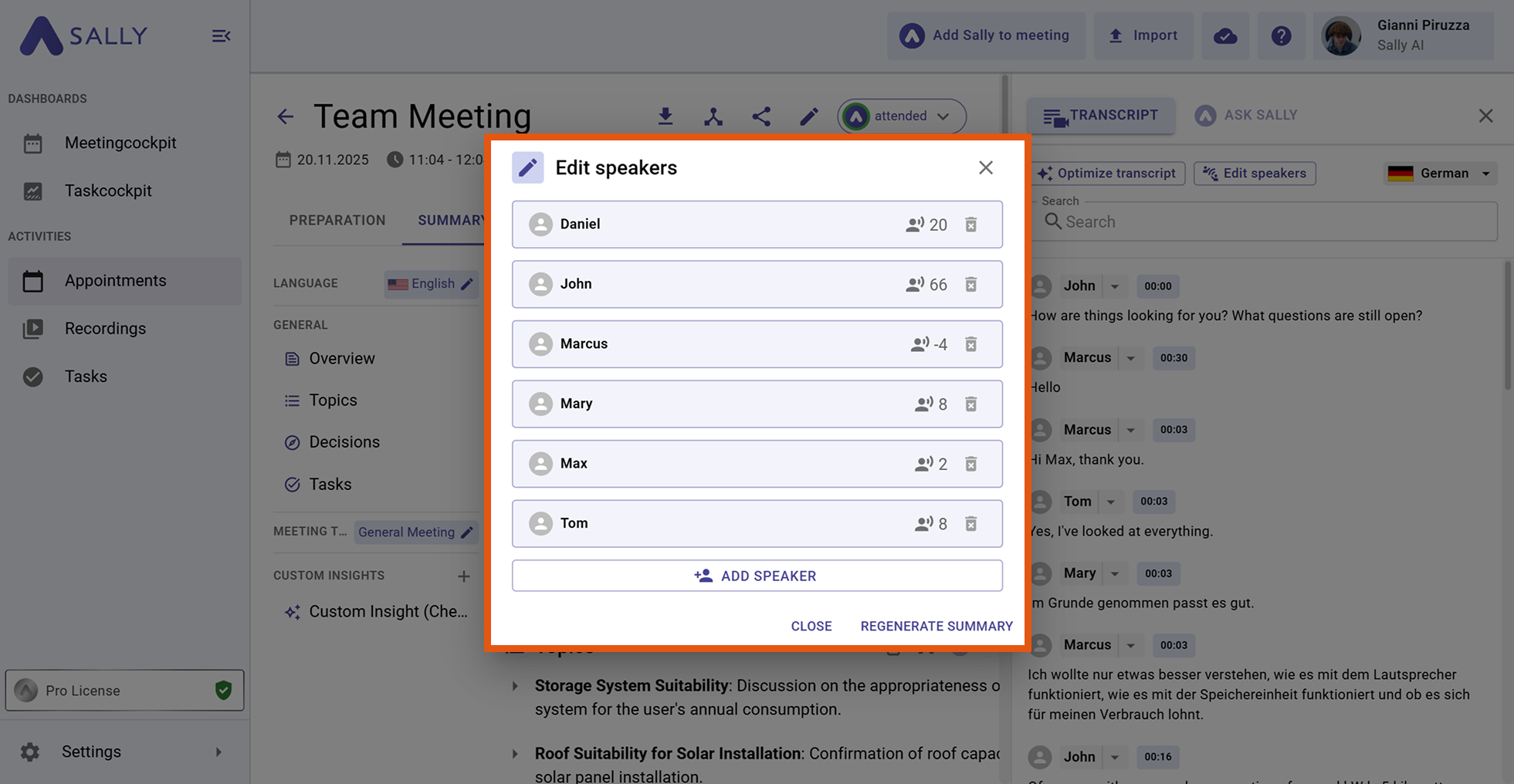
2.1. If the correct speaker does not appear in the list, you can add them by selecting "Add new speaker".
2.2 Then click "Add speaker" to confirm and add the new speaker.
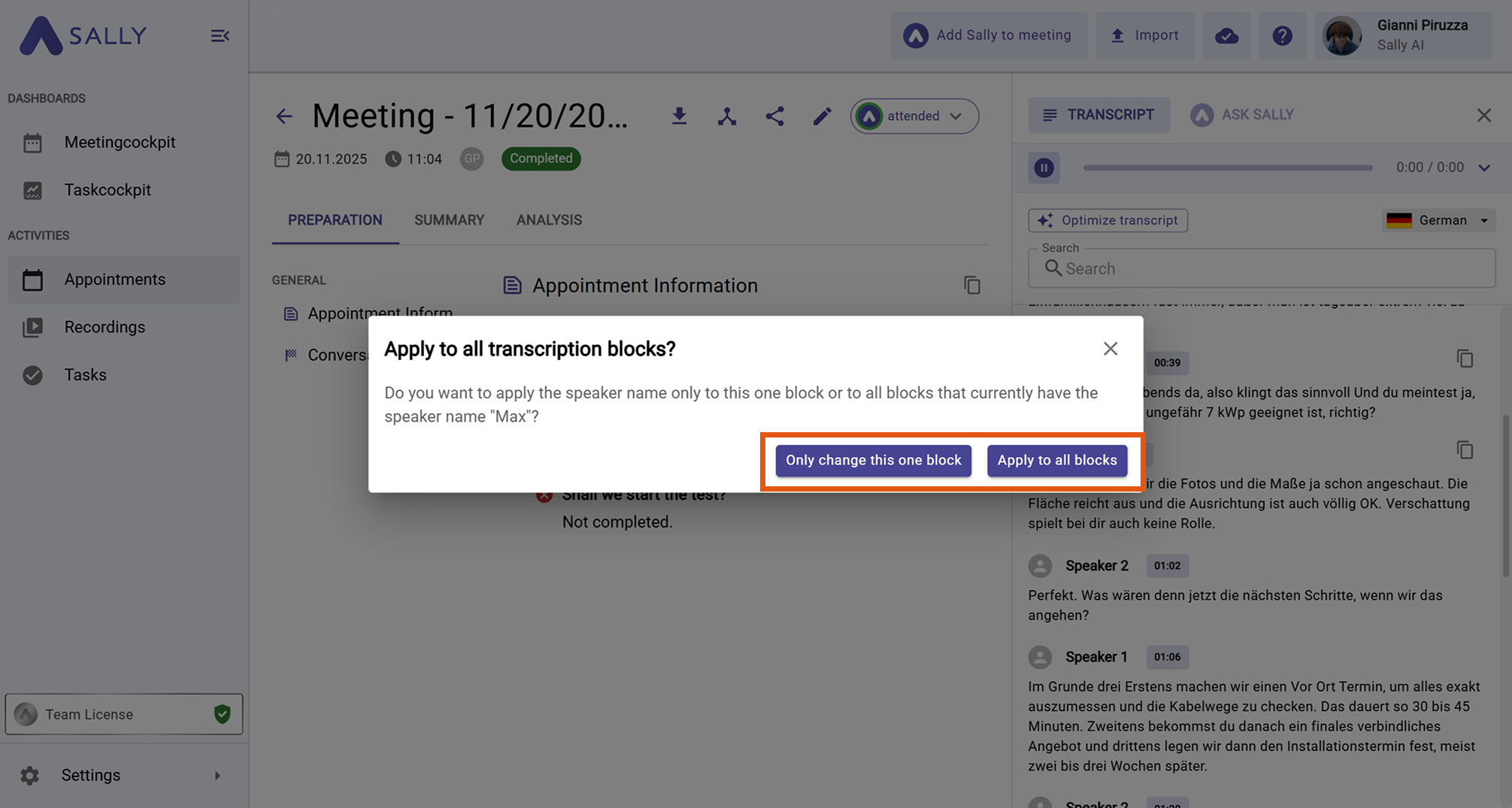
- Then choose one of the following options:
- Change only this block: This option changes the speaker name only for the currently selected text block.
All other text blocks remain unchanged — even if they use the same speaker name.
ExampleIn a meeting, a single sentence was incorrectly assigned to Anna, even though it was spoken by Tom.
If you select “Change only this block”, only this one sentence will be changed to Tom.
All other parts where Anna is speaking correctly remain unchanged.
- Apply to all blocks: This option changes the speaker name globally for all text blocks that are currently assigned to this speaker.
ExampleThe speaker was recognized as Speaker 1 throughout the transcript, but their actual name is Max.
If you select “Apply to all blocks”, all text blocks assigned to Speaker 1 will automatically be renamed to Max.
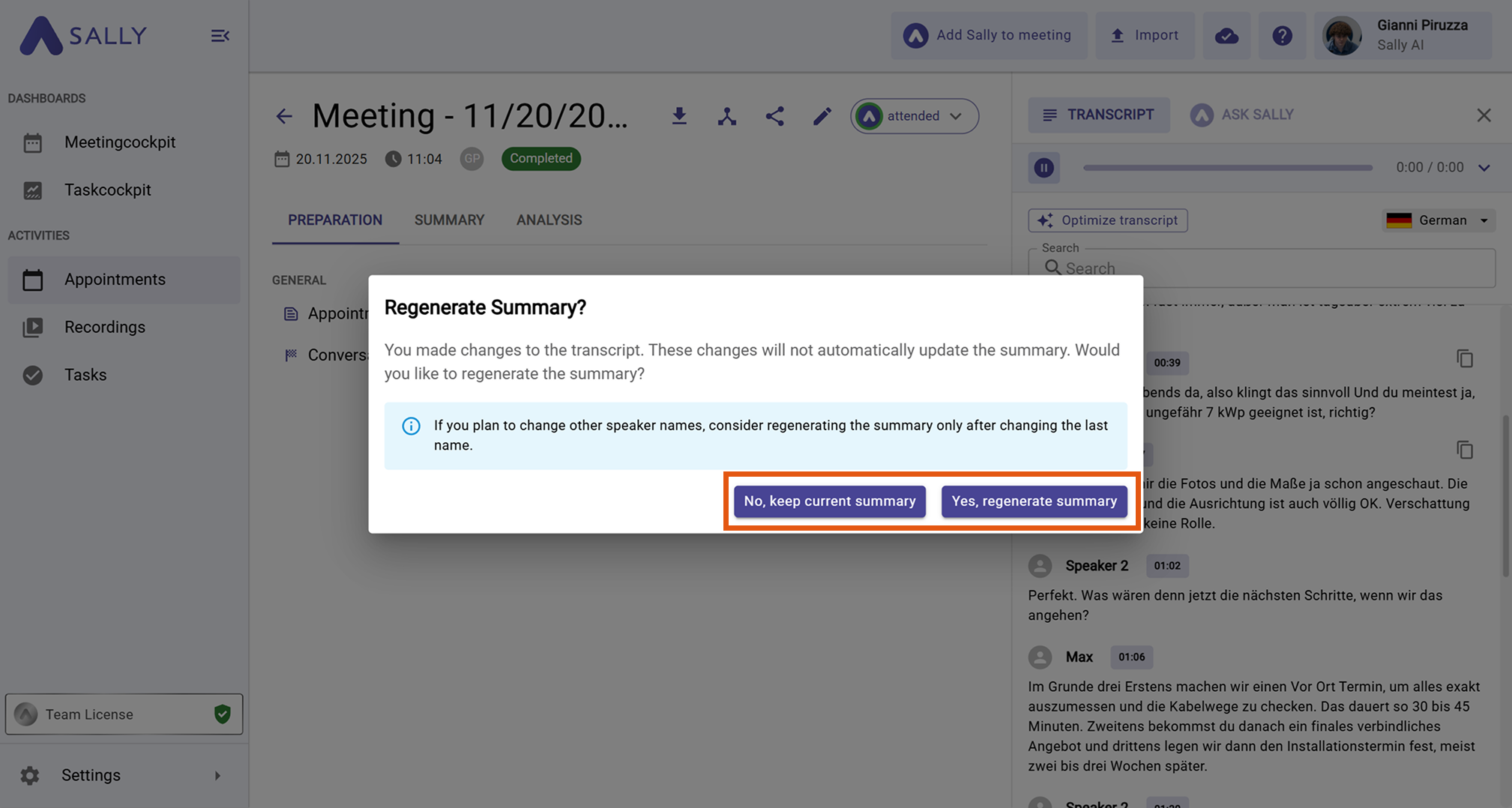
- Choose whether the summary should be regenerated.
2.6 Change transcript language
In rare cases, you can manually change the transcript language — for example, if the automatic language detection was incorrect.
How to change the transcript language:
- Open the language options in the transcript.
- Select the desired language.
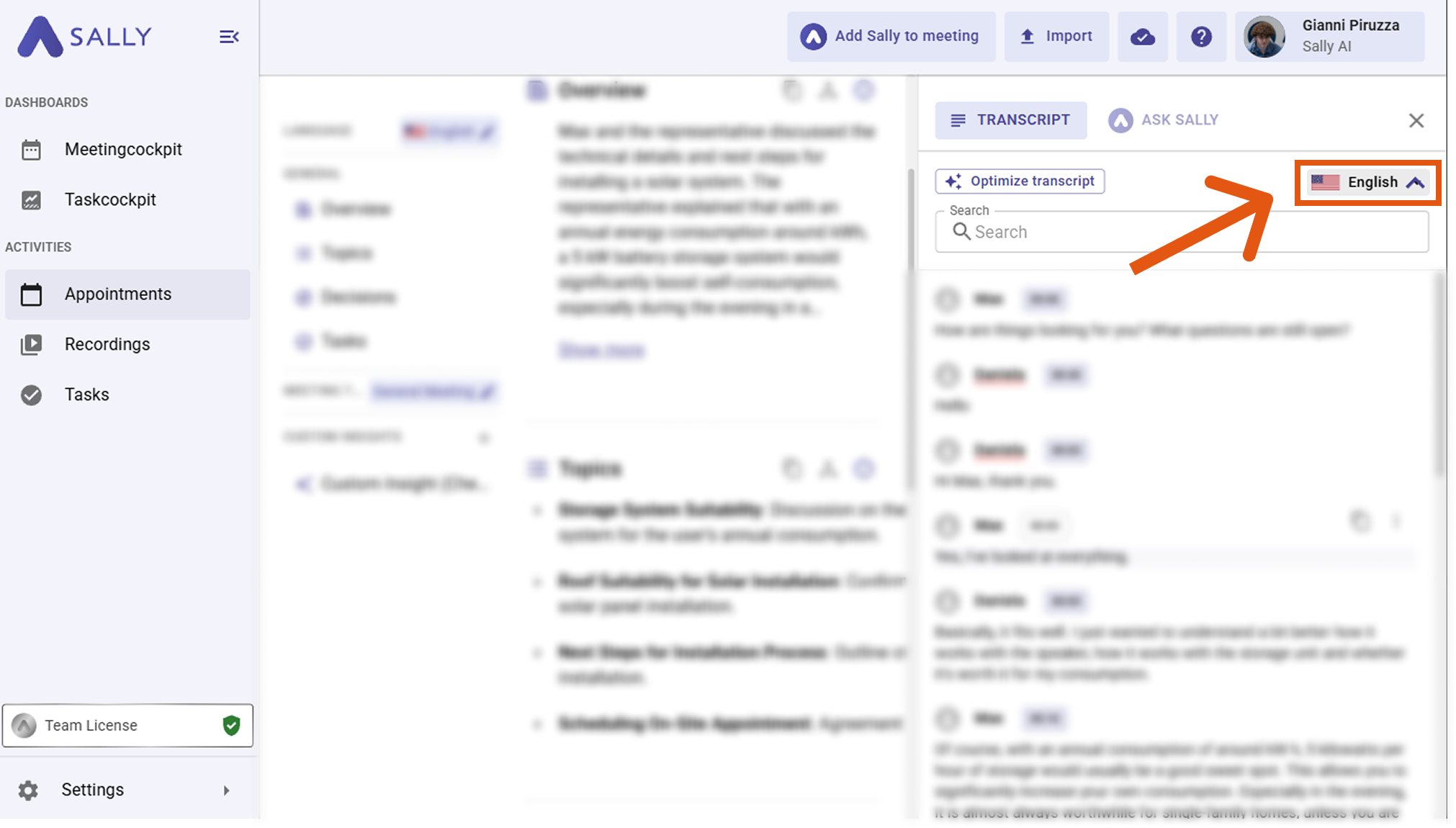
When you change the language, the transcript is only translated and displayed in the selected language. The underlying transcription itself remains unchanged.
If you want to use a different language for the actual transcription, you need to reprocess the transcript via Optimize transcript.
3. Review and finalize
Before finishing, read through the entire transcript once more to ensure it is complete and accurate.
Best practices:
- Read the full text to catch any remaining errors.
- Check that speaker names are consistent throughout.
- Make sure the timestamps are correct.
- Ensure that important points, decisions, and to-dos are included.
- Verify that the summary still matches the updated transcript.
Once you are satisfied with your changes, you can download the transcript — for sharing, archiving, or further processing.