Sally MCP with Claude Desktop
Claude Desktop is Anthropic's desktop application for macOS and Windows. The Model Context Protocol (MCP) is an open standard that lets AI tools connect to external data sources. Claude Desktop supports MCP servers natively through a JSON config file, so connecting Sally takes only a few minutes. Once set up, you can search your Sally meetings, read summaries, and pull transcripts directly in a Claude conversation, for example to prepare for an upcoming call, recap action items, or find what was discussed in a past meeting.
- Claude Desktop installed on macOS or Windows (download from claude.ai/download).
- Node.js 18 or later installed. Check in your terminal with
node -v. If not installed, download from nodejs.org. - An active Sally user with access to at least one company account.
- Sally MCP enabled for your company account (admin setting).
Quick Navigation
1. Create a Personal Access Token in Sally
A Personal Access Token (PAT) is the credential Claude Desktop uses to authenticate against the Sally MCP endpoint. You create it once.
- Log in to Sally at app.sally.io.
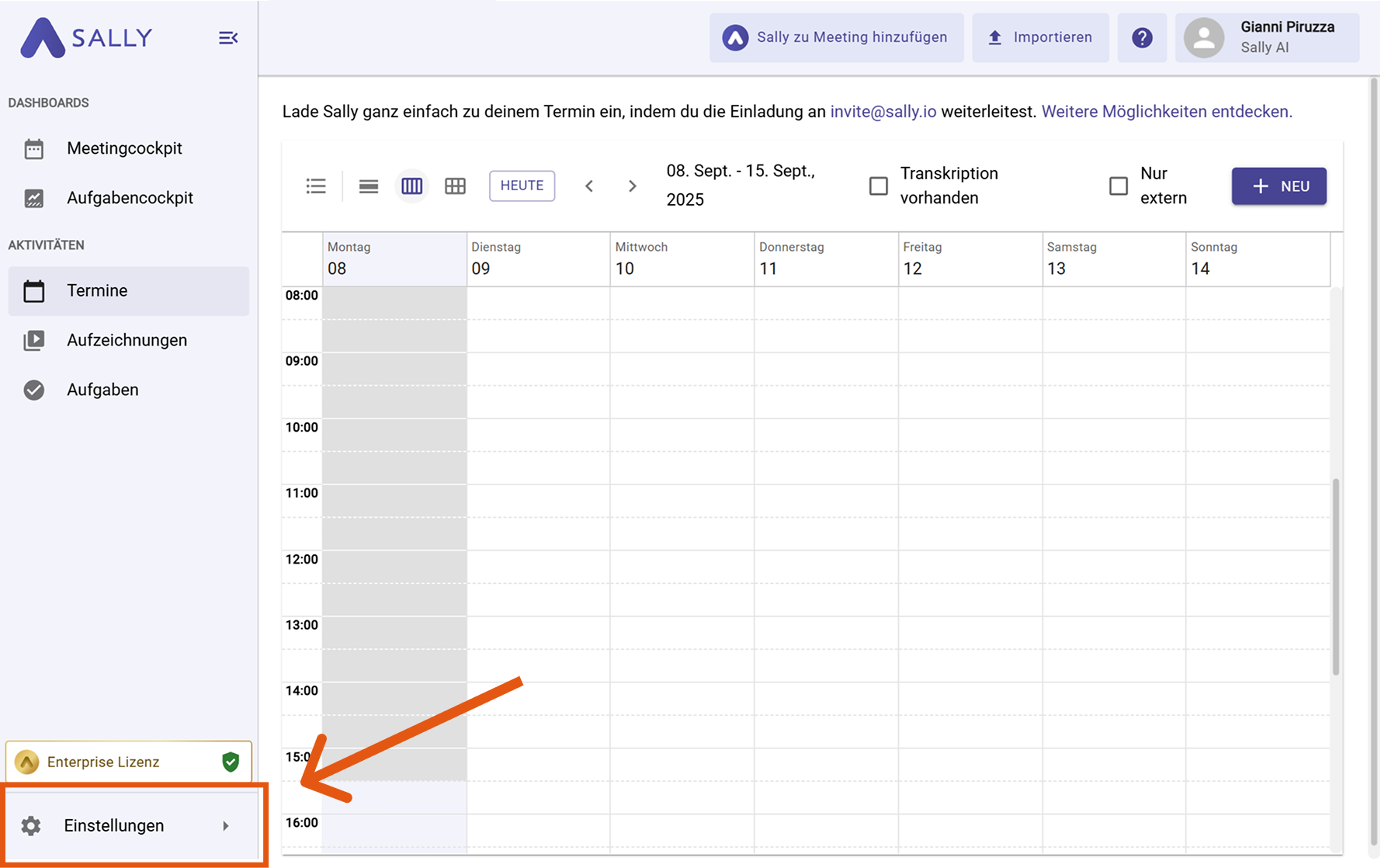
- Open Settings in the bottom-left of the sidebar.
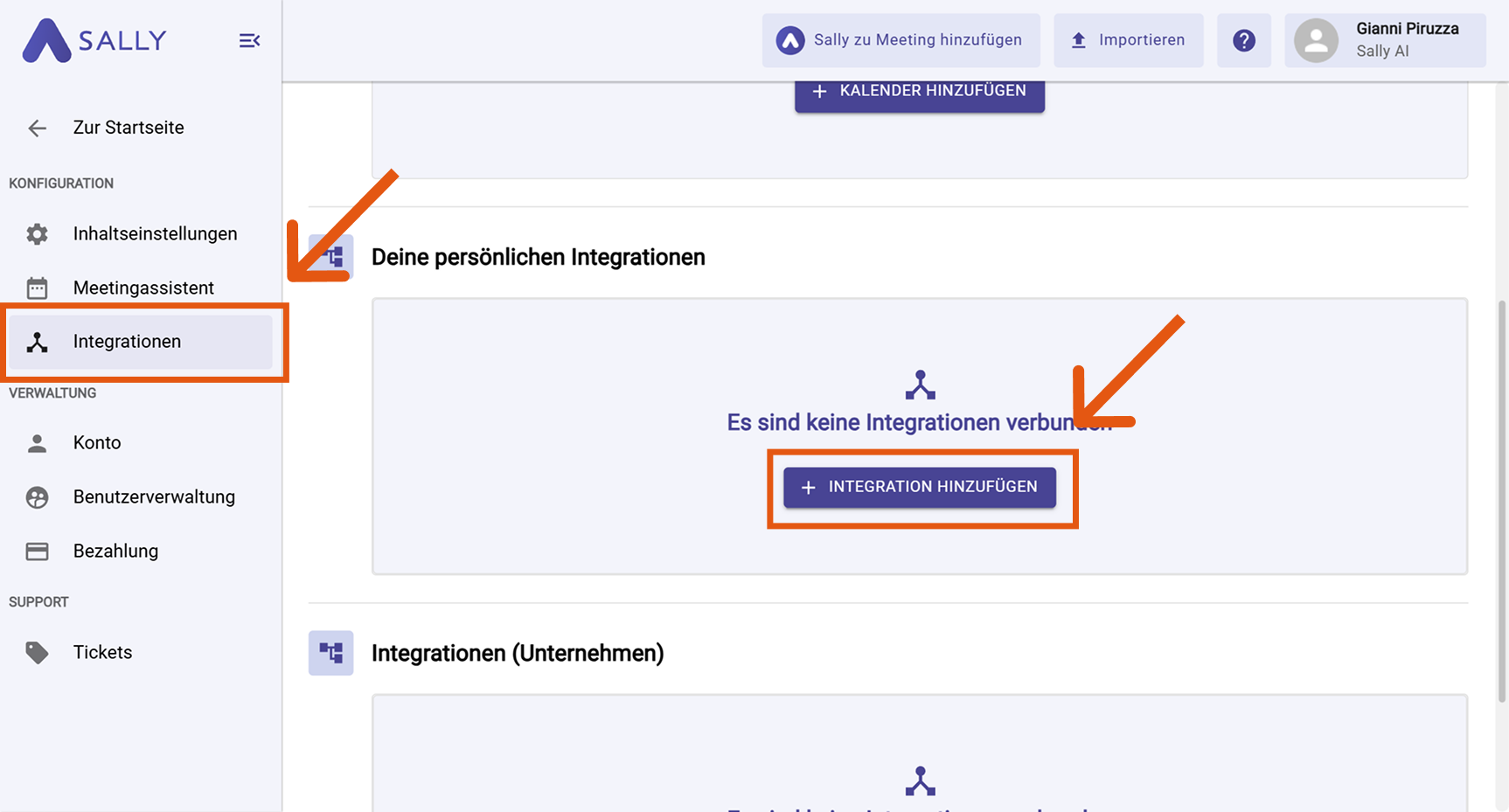
- In Settings, choose "Integrations". Under "Your personal integrations", click "+ Add integration".
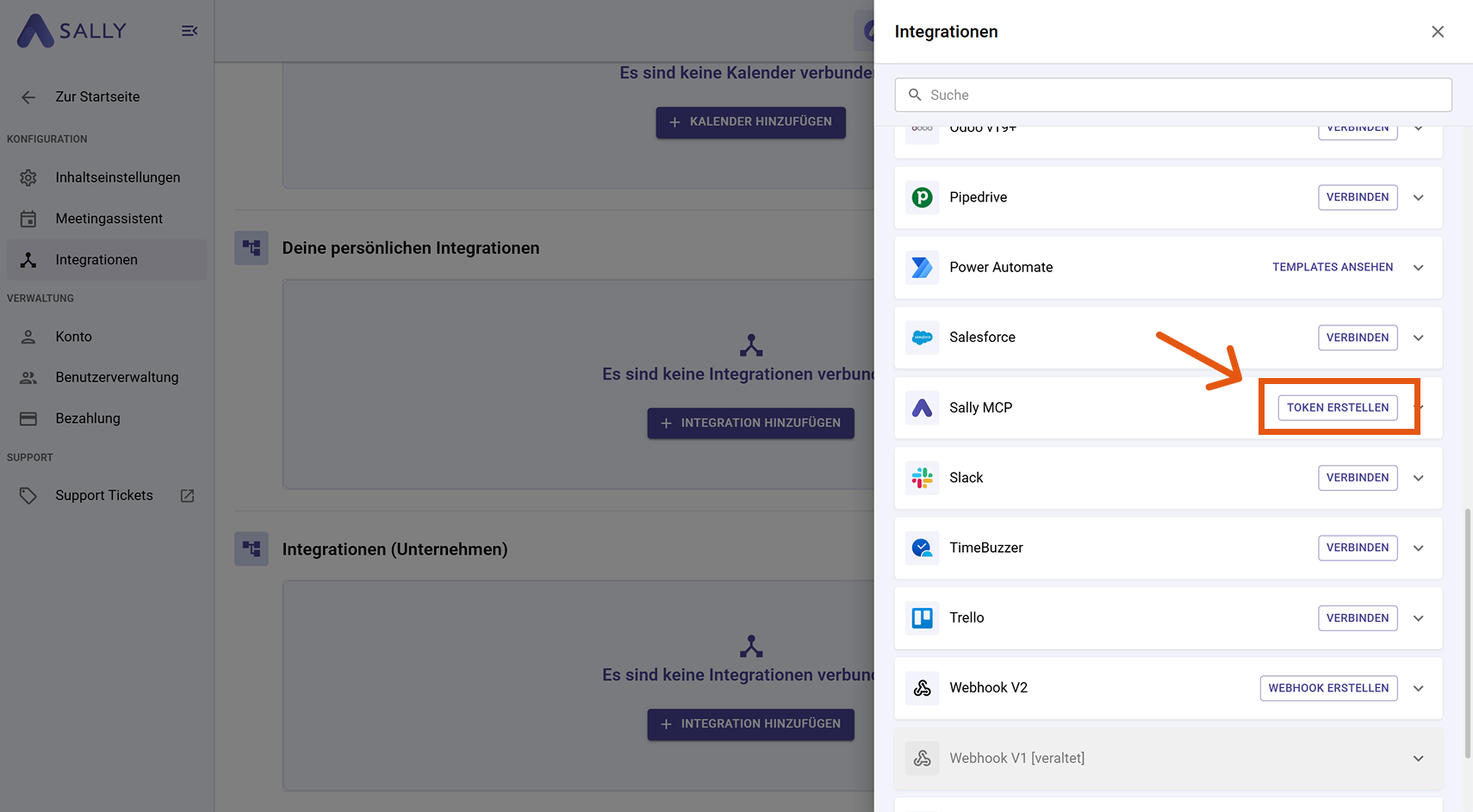
- In the integration drawer, find "Sally MCP" and click "Create Token".
-
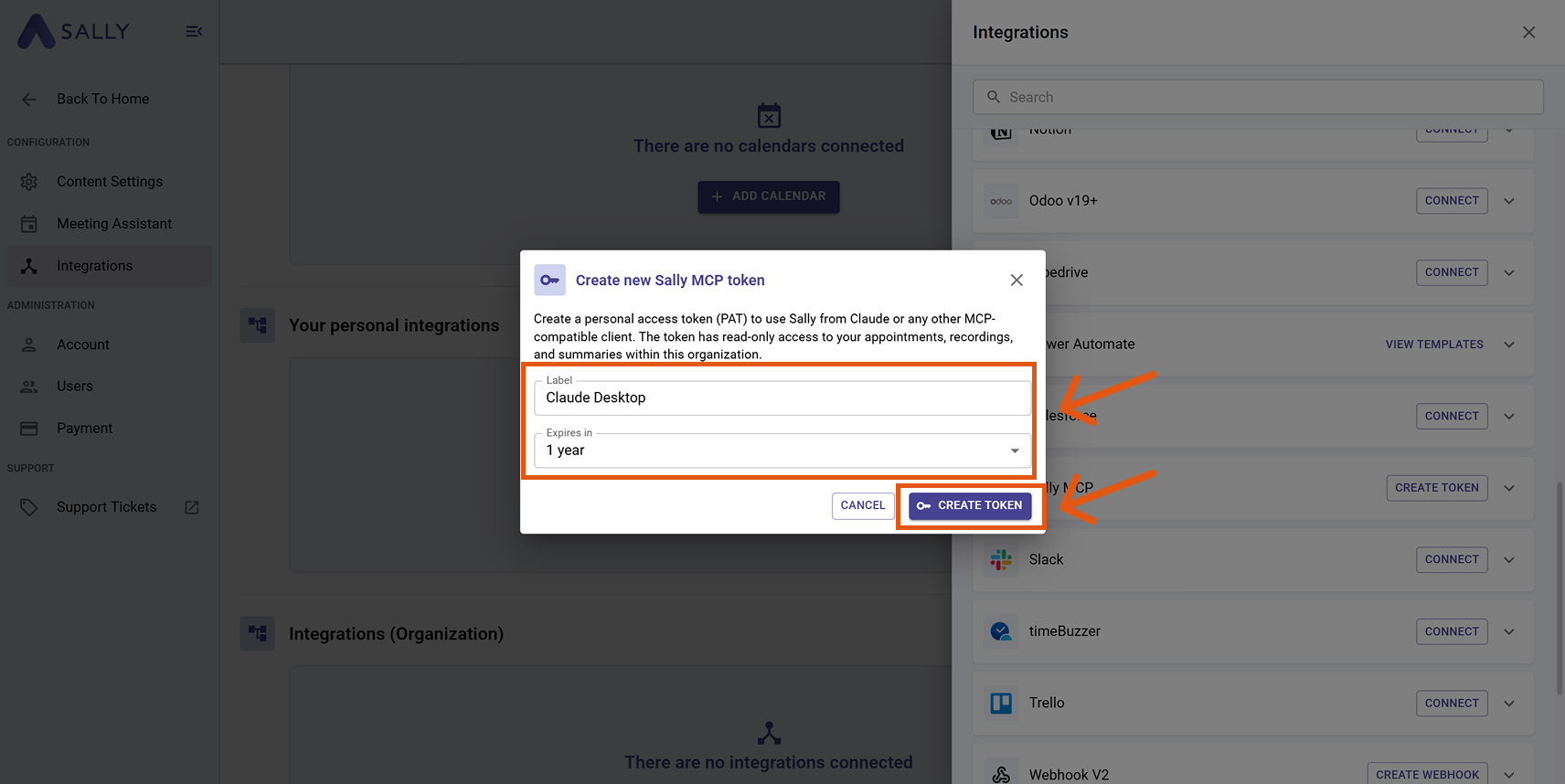
Fill out the "Create new Sally MCP Token" dialog:
- Name: a label that helps you recognize the token later (e.g. "Claude Desktop").
- Expires: choose a lifetime: 30 days, 90 days, 1 year, 2 years, or Never.
Then click "Create Token".
- Sally displays the full token exactly once. Copy it immediately and store it in a password manager or secure secret store. Once you close the dialog, the clear-text value is gone: you cannot view it again, only regenerate it.
The token grants read access to every appointment, recording, and summary your Sally user sees in this company account. Do not paste it into Slack, email, or tickets. Store it in a password manager.
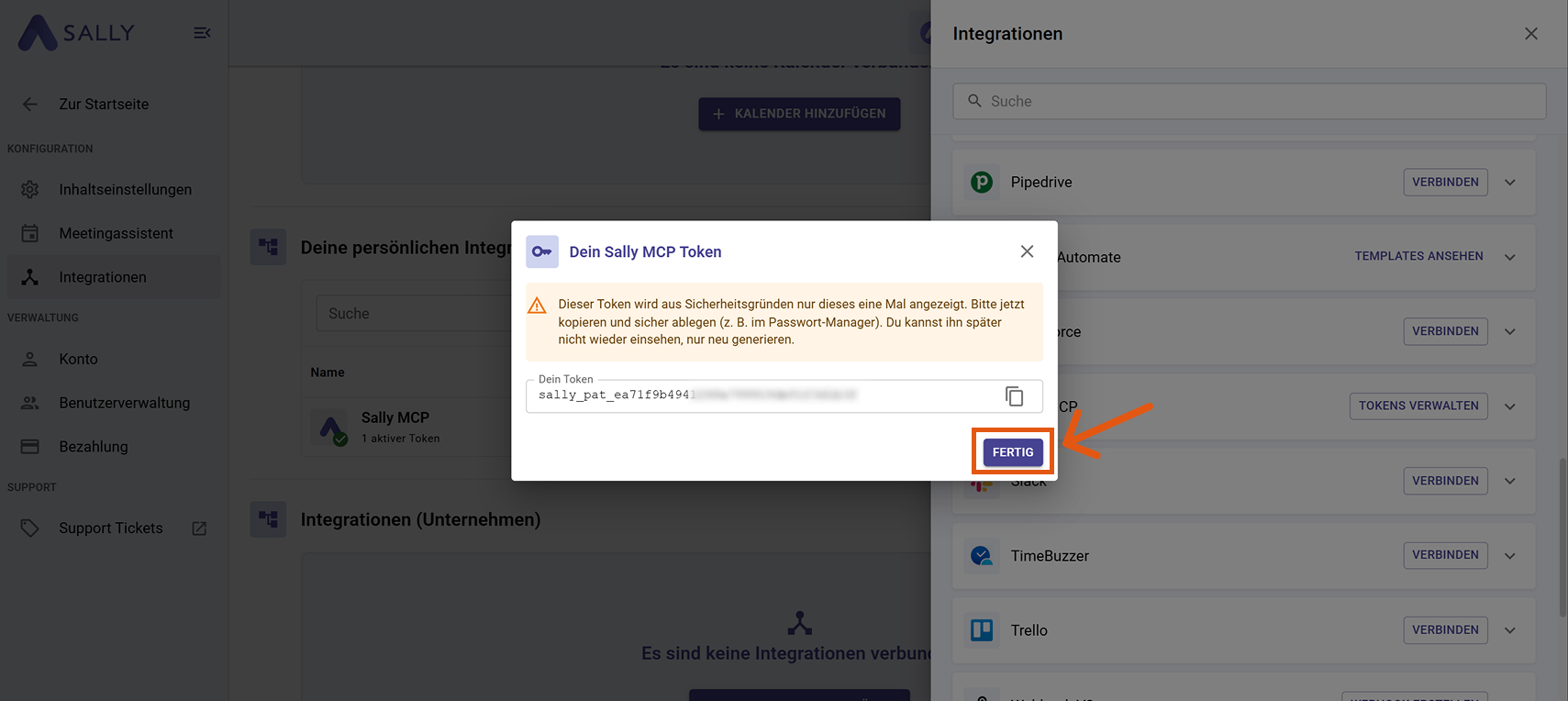
- Click "Done".
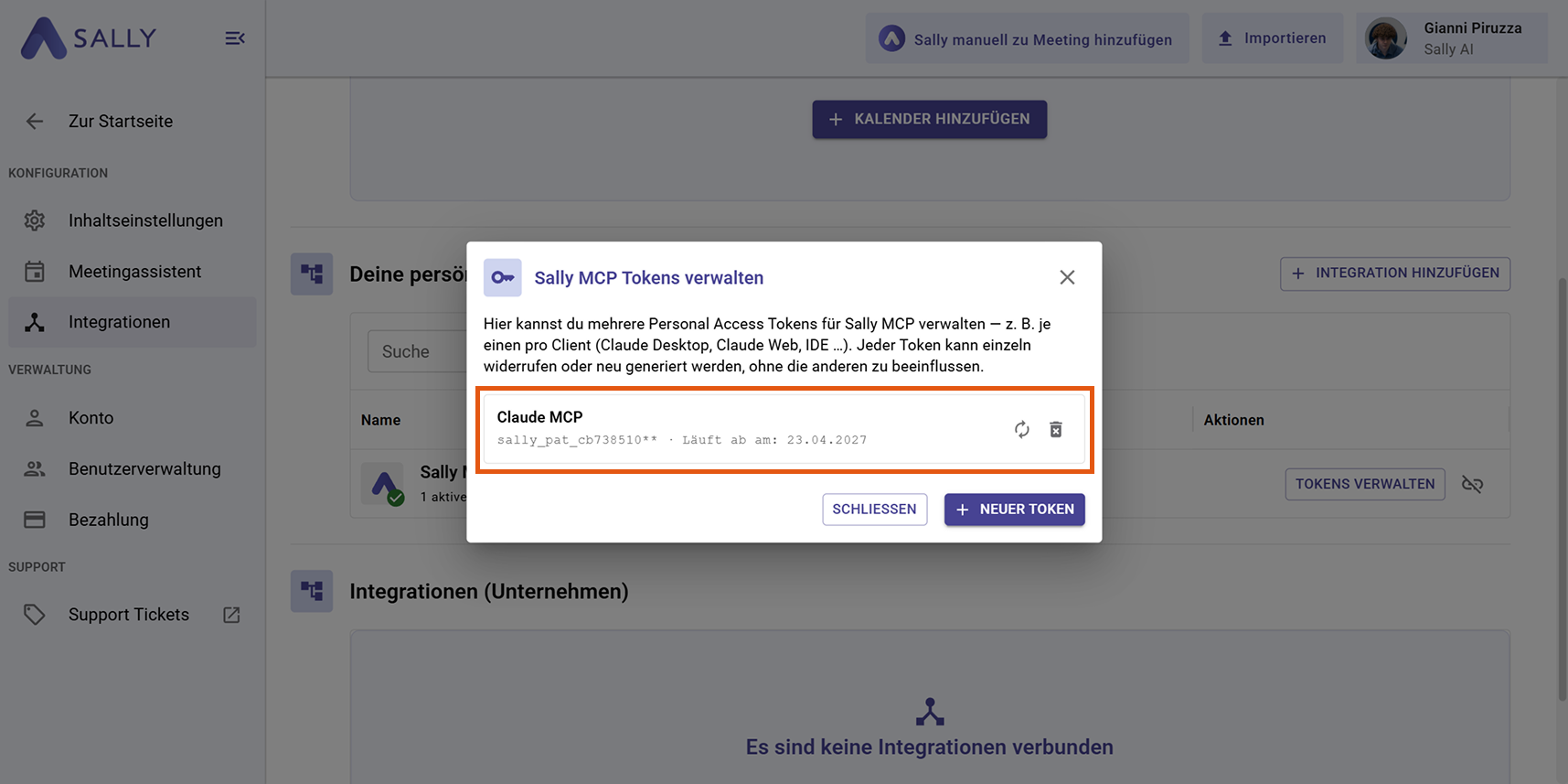
You can return to Settings → Integrations → Sally MCP → "Manage Tokens" at any time to regenerate, revoke, or create additional tokens. Regenerating invalidates the old token immediately, so update it in any client that still uses it.
2. Set Up the MCP Connection in Claude Desktop
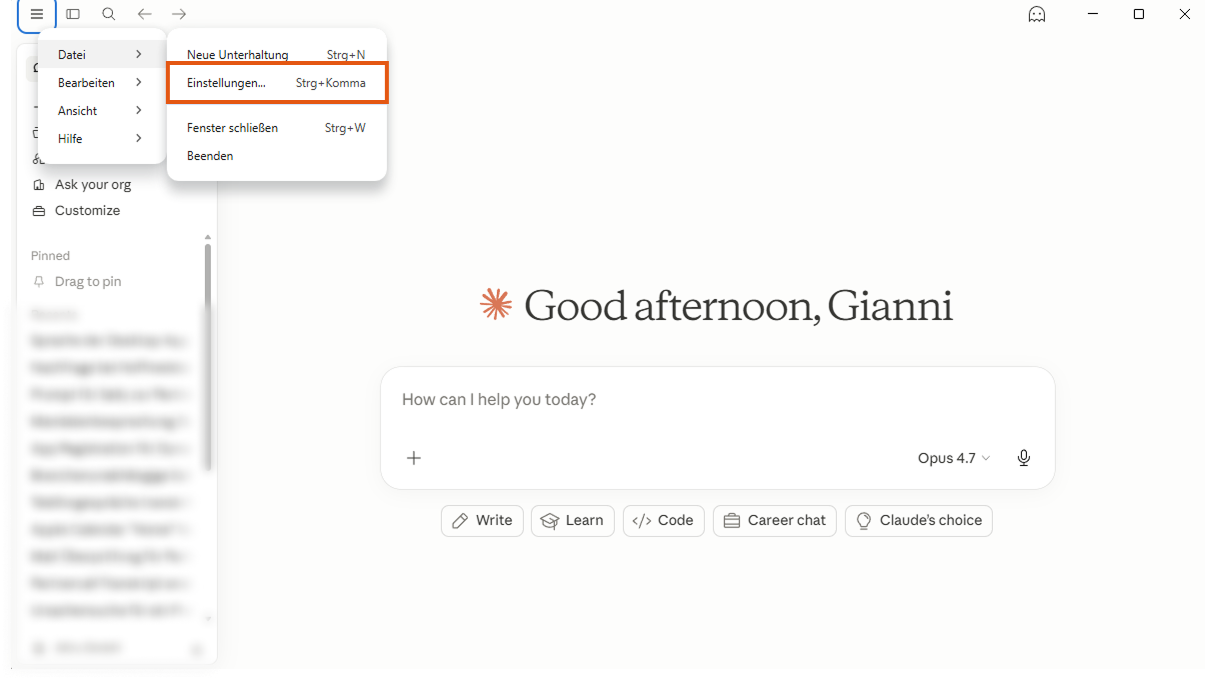
- Open Claude Desktop.
- Click the hamburger menu (top-left) and then "Settings...".
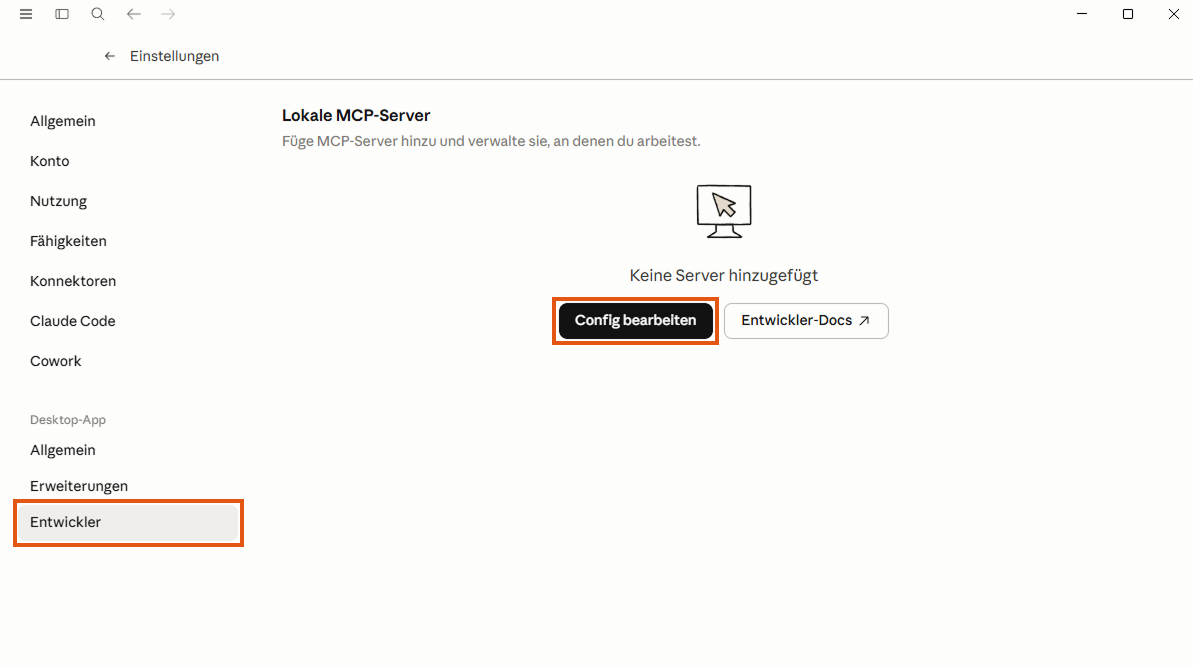
- Navigate to Developer in the left sidebar.
- Click "Edit Config". This opens the file
claude_desktop_config.jsonin your default text editor.
The config file location depends on your operating system:
| OS | Path |
|---|---|
| macOS | ~/Library/Application Support/Claude/claude_desktop_config.json |
| Windows | %APPDATA%\Claude\claude_desktop_config.json |
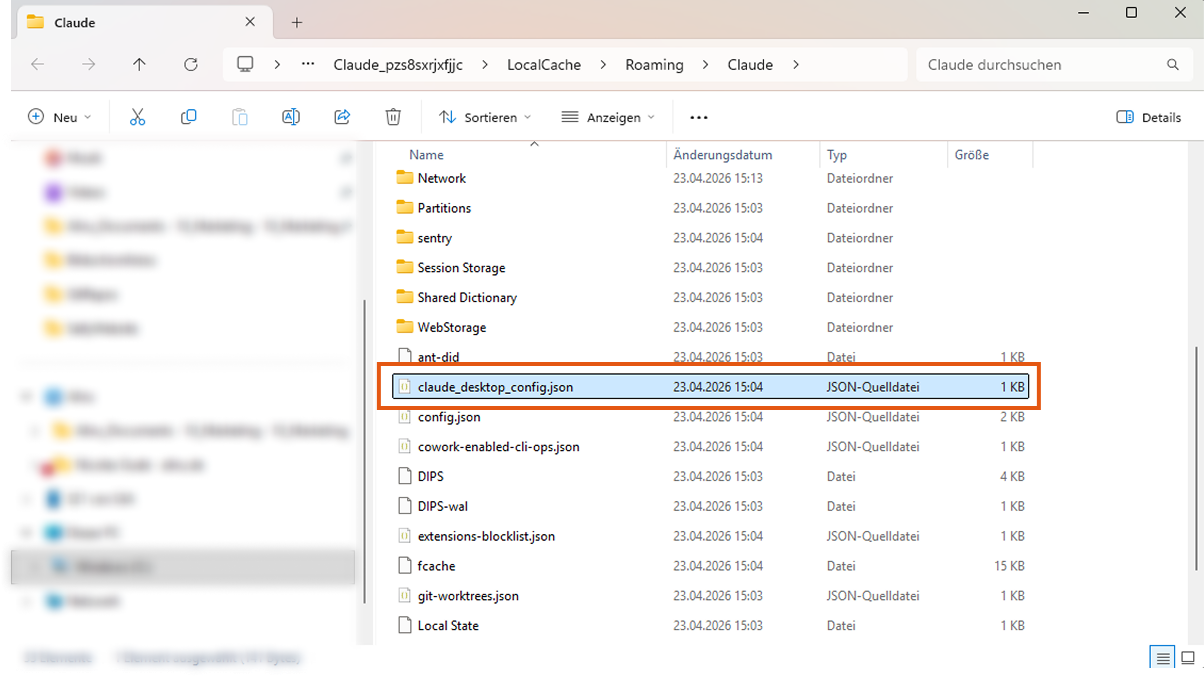
If the file doesn't exist or is empty, Claude Desktop creates it the first time you click "Edit Config". You can also create it manually at the path above.
- Paste the following snippet into the config file. If the file already has content (e.g. a
"preferences"block), add"mcpServers"as a sibling property with a comma between them.
{
  "mcpServers": {
    "sally": {
      "command": "npx",
      "args": [
        "-y",
        "mcp-remote",
        "https://app.sally.io/api/v1/McpExternal",
        "--header",
        "Authorization: Bearer sally_pat_PASTE_YOUR_TOKEN_HERE"
      ]
    }
  }
}
Replace PASTE_YOUR_TOKEN_HERE with the token you created in Step 1. Keep the sally_pat_ prefix and the surrounding quotes.
Claude Desktop opens the config file in your default text editor. This could be Notepad, TextEdit, VS Code, or any other editor. It doesn't matter which one. The following screenshot shows VS Code as an example.
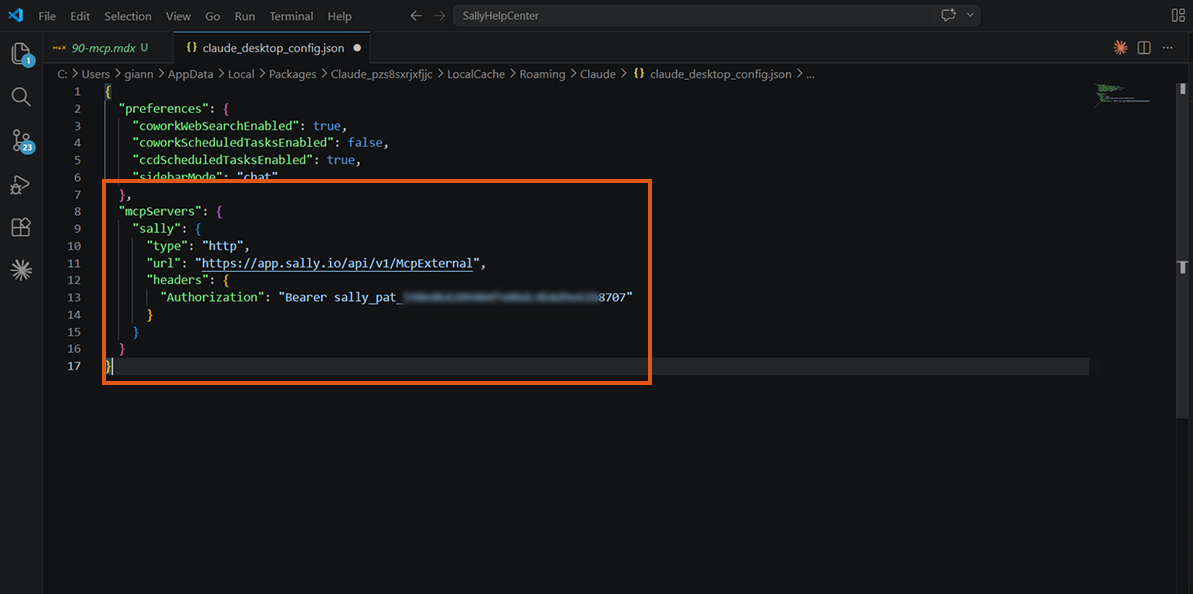
Example with an existing preferences block:
{
  "preferences": {
    "theme": "dark"
  },
  "mcpServers": {
    "sally": {
      "command": "npx",
      "args": [
        "-y",
        "mcp-remote",
        "https://app.sally.io/api/v1/McpExternal",
        "--header",
        "Authorization: Bearer sally_pat_abc123..."
      ]
    }
  }
}
- Save the file, then close Claude Desktop completely (quit from the system tray / menu bar, not just close the window) and reopen it. Claude Desktop reads the config file on startup.
Start a new conversation and type:
"Which Sally tools are available?"
Claude should list the five Sally tools (search_appointments, search_summaries, get_recordings, get_summary, get_transcription). You can also try a real query:
"Search my Sally meetings from the last 7 days."
3. Troubleshooting
| Issue | Fix |
|---|---|
| Sally tools don't appear | Make sure the config file is valid JSON (no trailing commas, all braces matched). Restart Claude Desktop completely. |
| "Unauthorized" or "Invalid token" | Double-check that the full token including the sally_pat_ prefix is pasted correctly, with no extra spaces or line breaks. |
| Connector is red / no status | Check the MCP log: • macOS: ~/Library/Logs/Claude/mcp-server-sally.log• Windows: %APPDATA%\Claude\logs\mcp-server-sally.log |
| Error "command not found: npx" or "npx is not recognized" | Node.js is not installed or not in the PATH. Install Node.js (version 18 or later) from nodejs.org and restart Claude Desktop. |
| Sally tools are not updated after changing the token | mcp-remote caches connection data locally. Delete the folder ~/.mcp-auth (macOS/Linux) or %USERPROFILE%\.mcp-auth (Windows) and restart Claude Desktop. |
For more troubleshooting tips, see the General Setup Guide → Troubleshooting.