How to connect Slack with Sally AI
Connect Sally AI with Slack to share what came out of a meeting straight in your team's channels or direct messages. With the Sally Slack integration you send action items and notes to Slack in one click, so nothing gets typed twice and everyone sees the same thing.
Quick navigation
1. How to connect Slack with Sally AI
Follow these steps to set up the Sally-Slack integration.
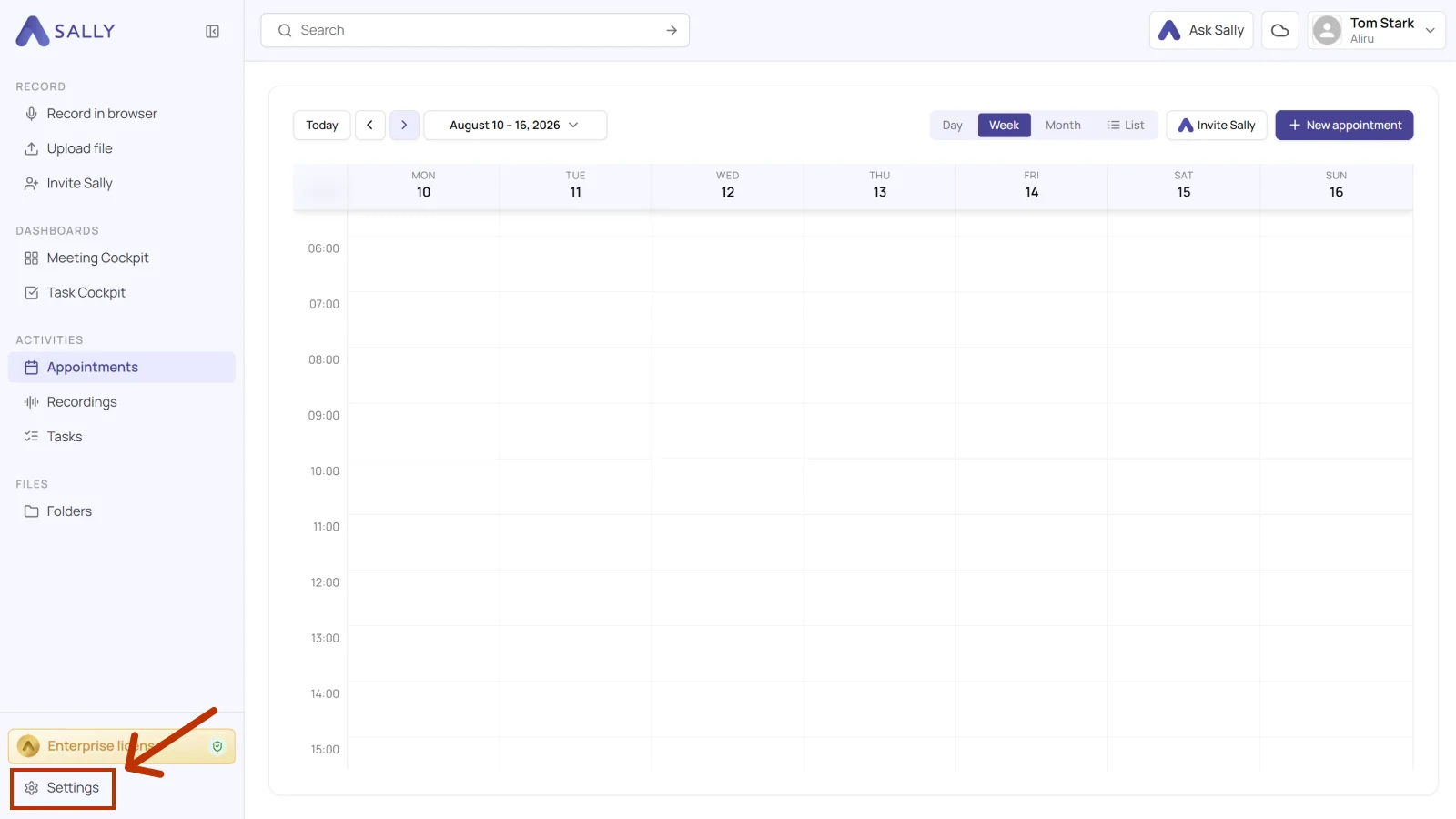
- Open Settings at the bottom of the left sidebar.
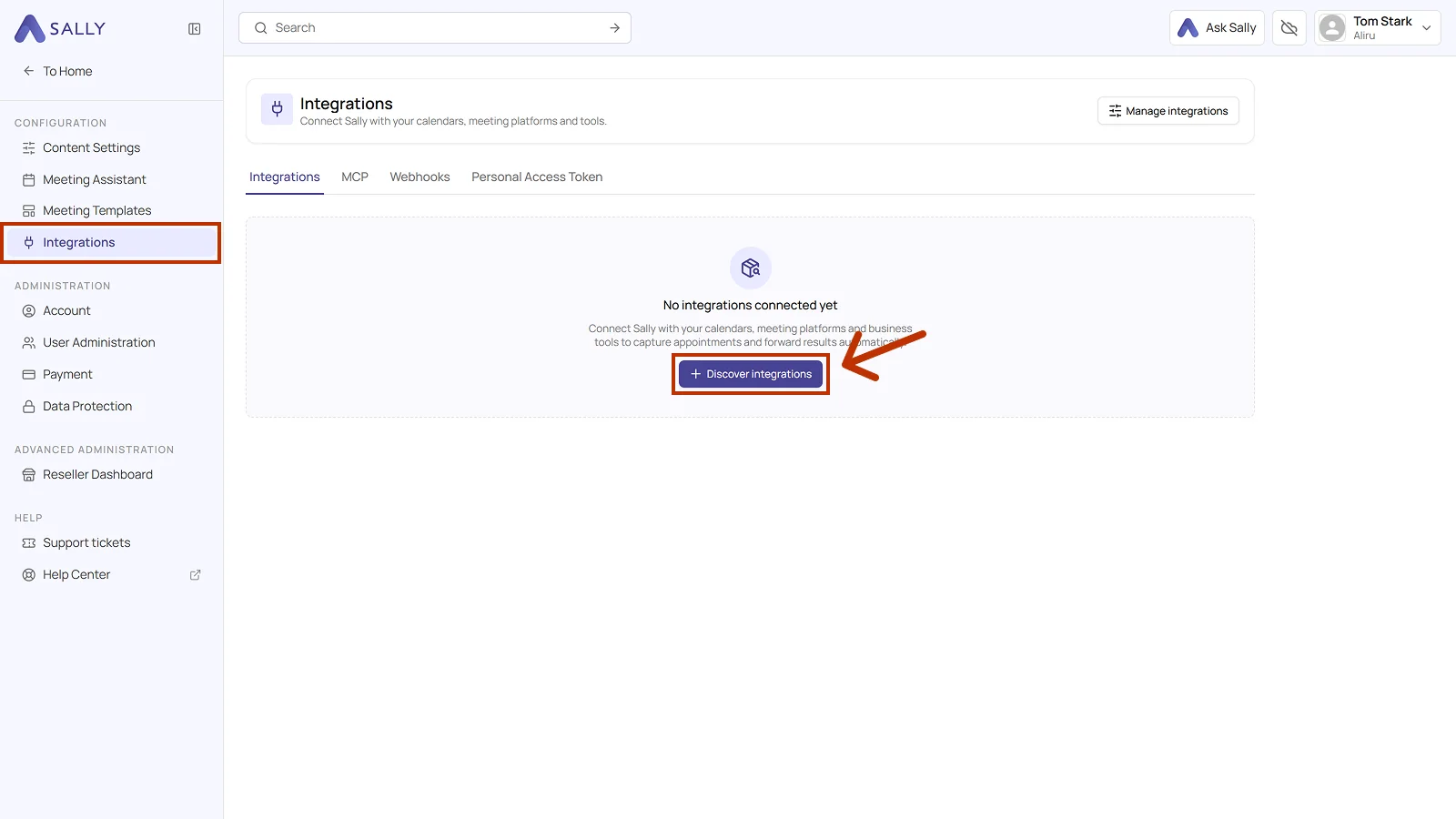
- Under Configuration, go to Integrations and click Discover integrations.
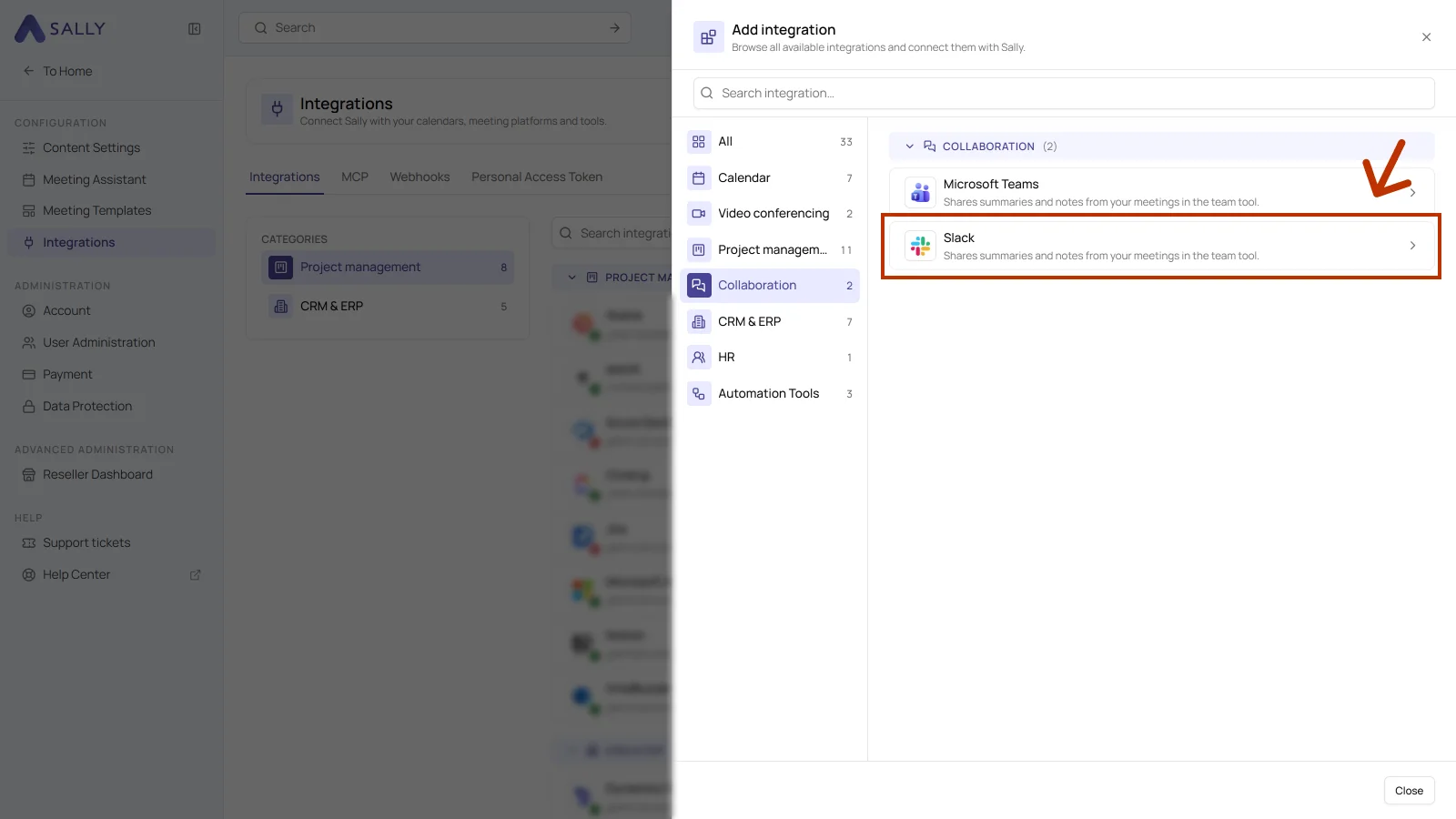
- Pick the Collaboration category on the left, then select Slack. The search bar at the top takes you straight there as well.
-
The panel on the right tells you what the integration transfers. Click Connect in the bottom right, then approve the access in Slack.
-
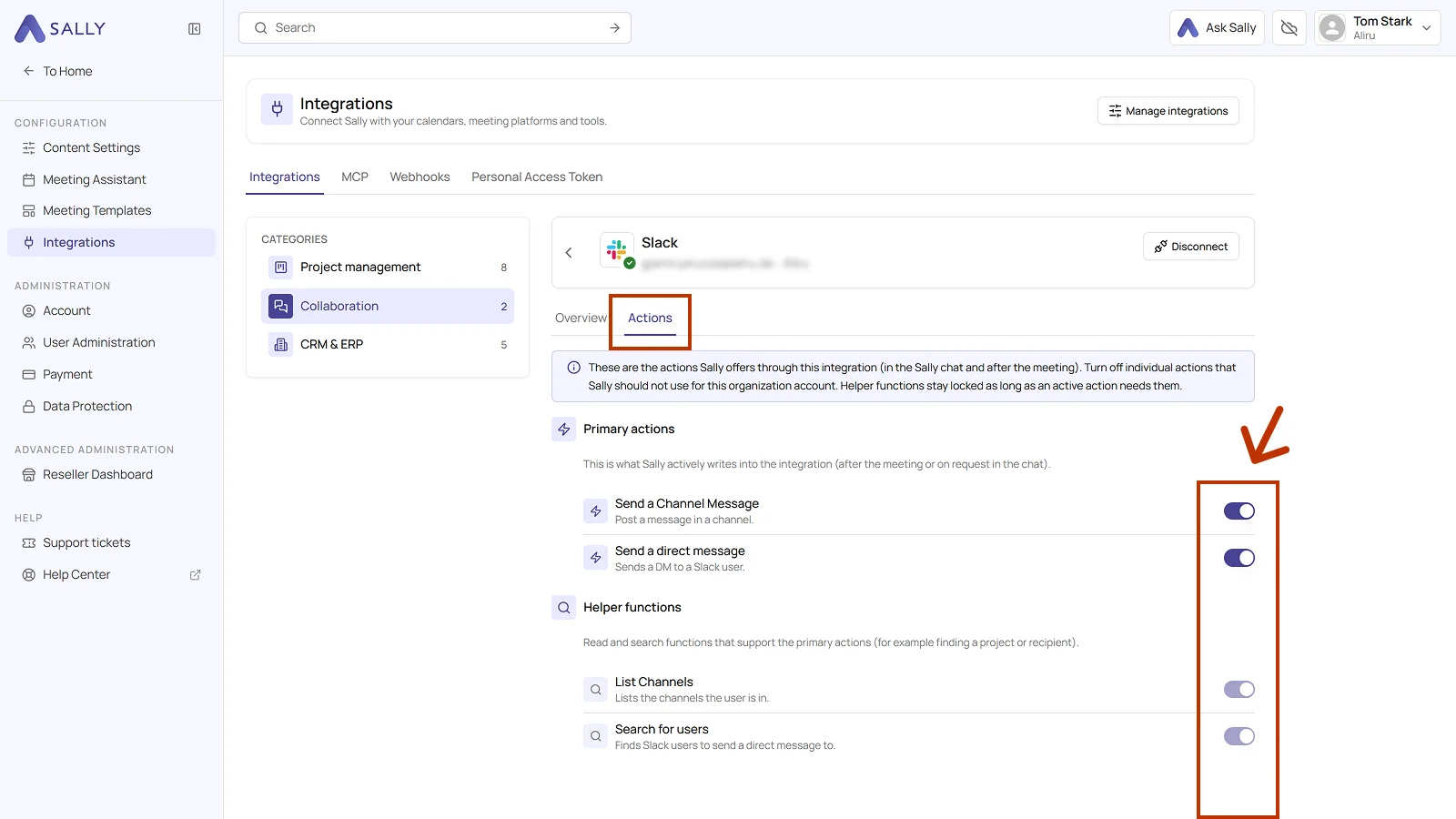
Once you have approved it, Slack is connected. The Actions tab shows what Sally offers through this integration and lets you switch off individual actions for the organization account. Helper functions stay locked while an active action needs them, which is why some toggles cannot be moved. Disconnect in the top right ends the connection again.
Whether an integration may be connected at all is up to owners and admins, see managing integrations for your users.
2. How to send insights to Slack
Once Slack is connected, a few clicks are enough to move content from a recording into Slack, either as a direct message to individual people or as a message in a channel.
The route is always the same: open the recording you need and click the Integrations icon. It sits at the top of every section and on every single line. Below it you find the two Slack actions.
You can:
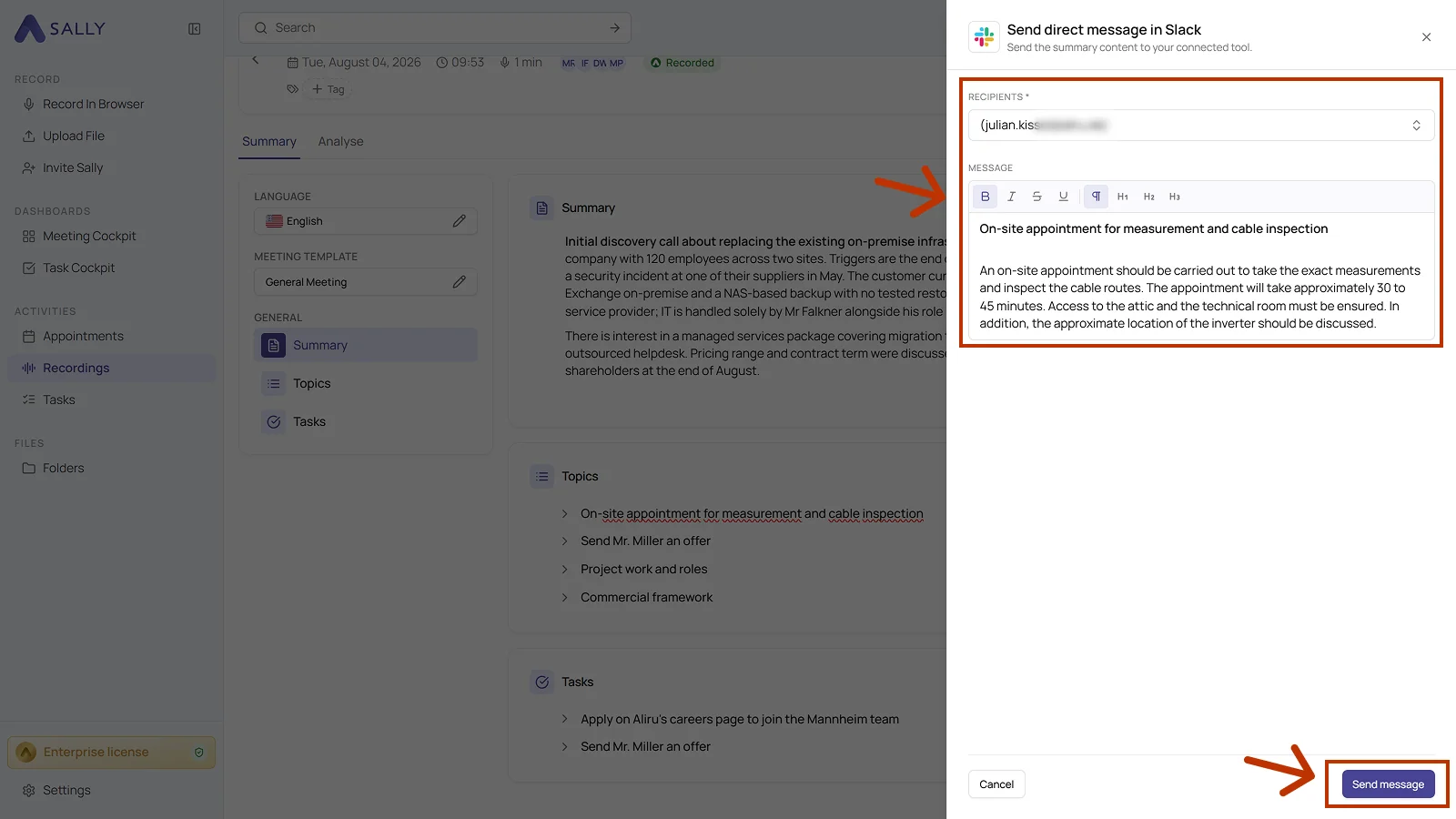
Both actions come prefilled with the message from the summary, and you can edit it before sending.
2.1. Send a direct message in Slack
Send a line from the summary to individual people as a direct message.
- Choose Send direct message in Slack in the Integrations menu.
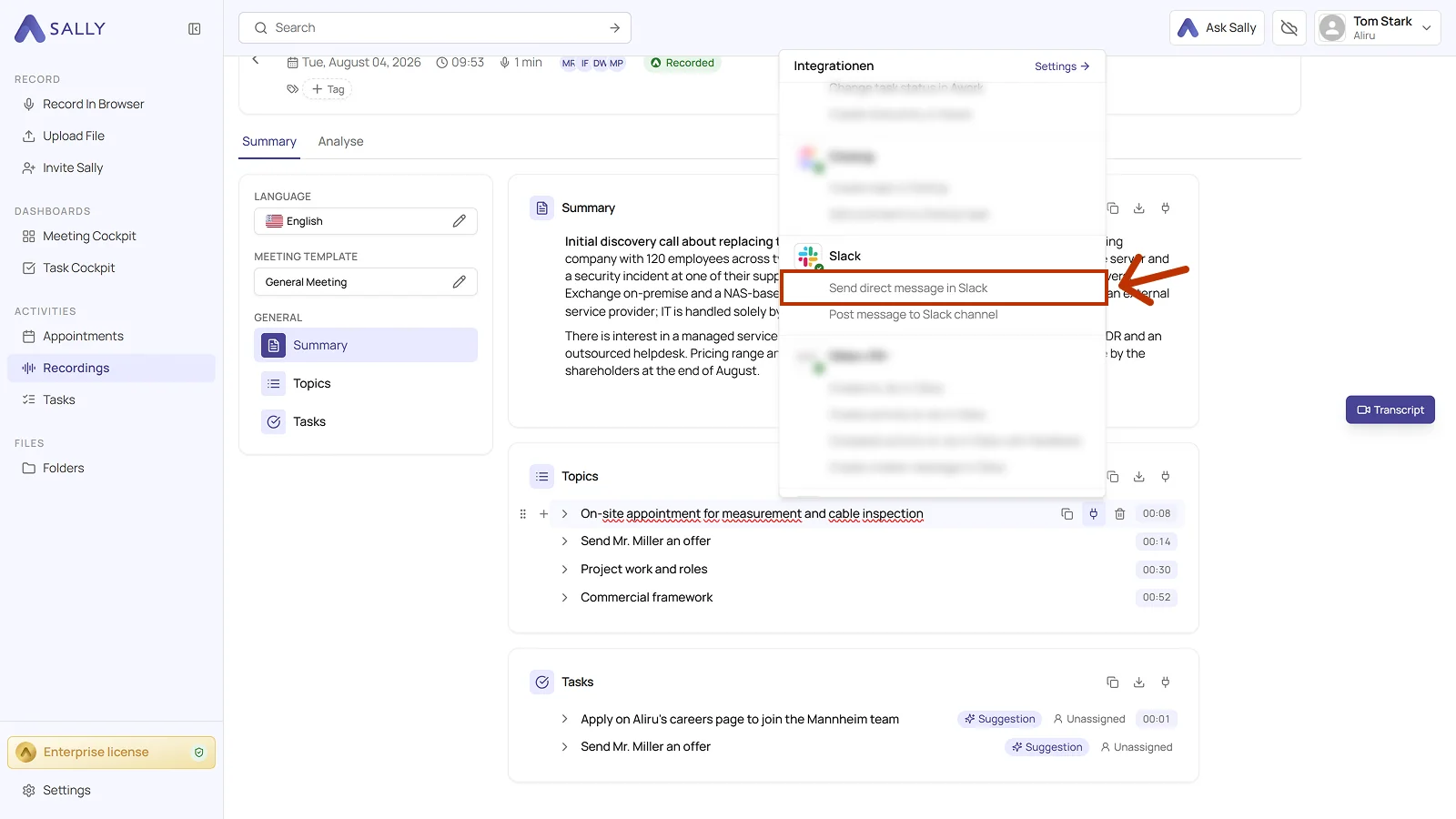
- Under Recipients, pick who should receive the message. The field is mandatory.
- Check the message and click Send message.
- The message shows up in Slack as a direct message.
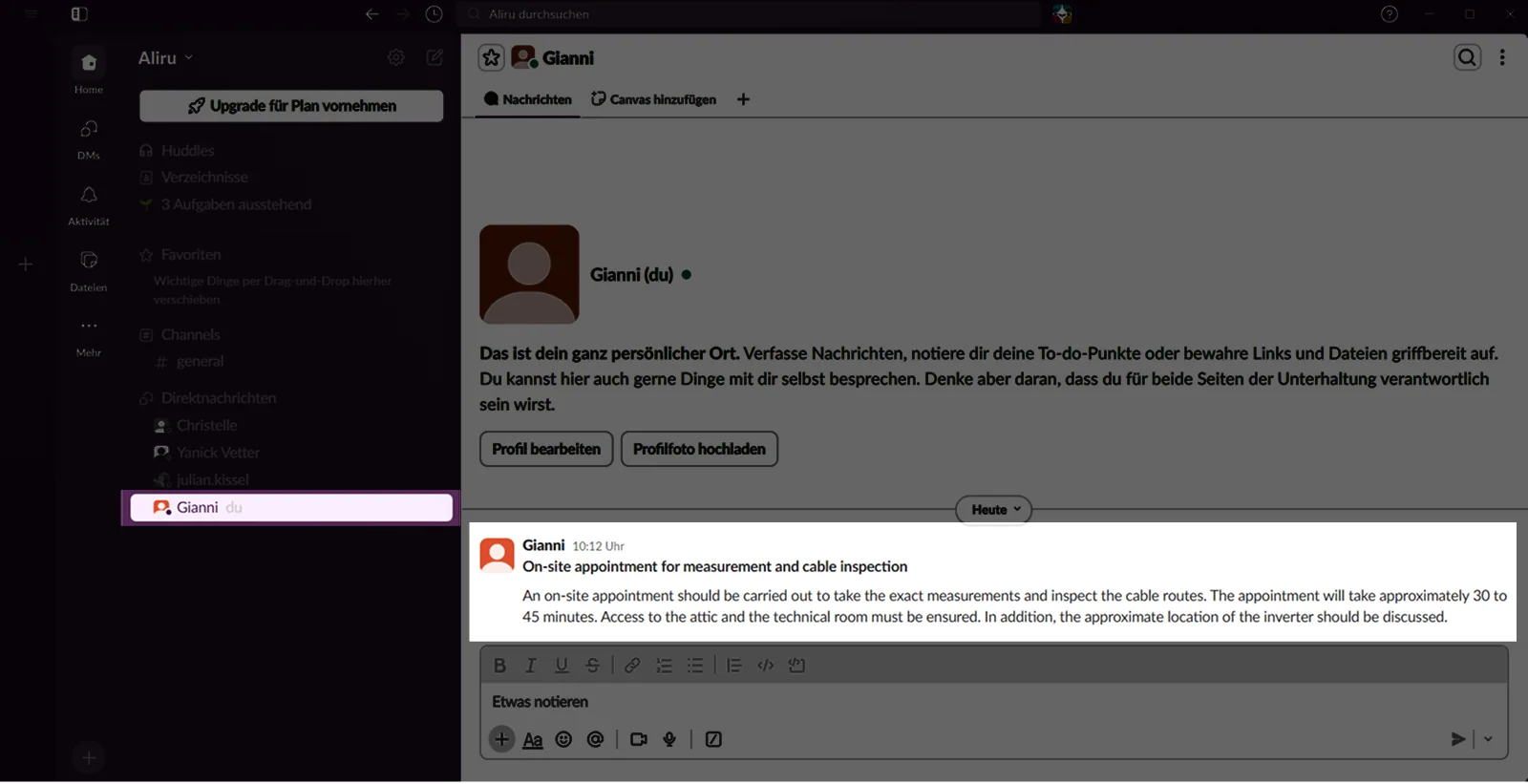
Use direct messages for direct, quick follow-ups with colleagues after meetings.
2.2. Post a message to a Slack channel
Share a line from the summary as a message in a channel so the whole team sees the context.
- Choose Post message to Slack channel in the Integrations menu.
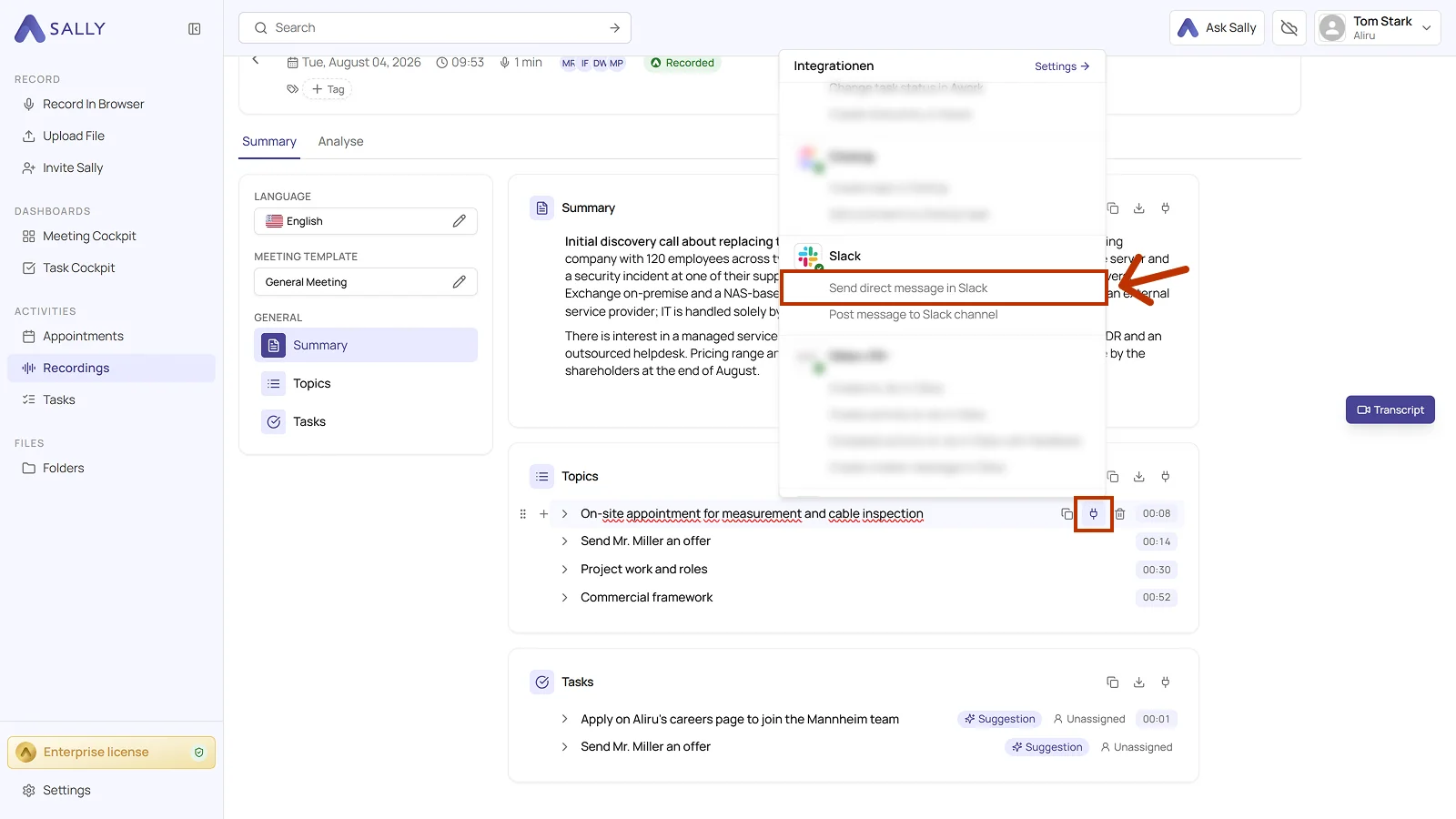
- Under Channel, pick where the message should go. The field is mandatory and lists the channels you belong to.
- Check the message and click Post message.
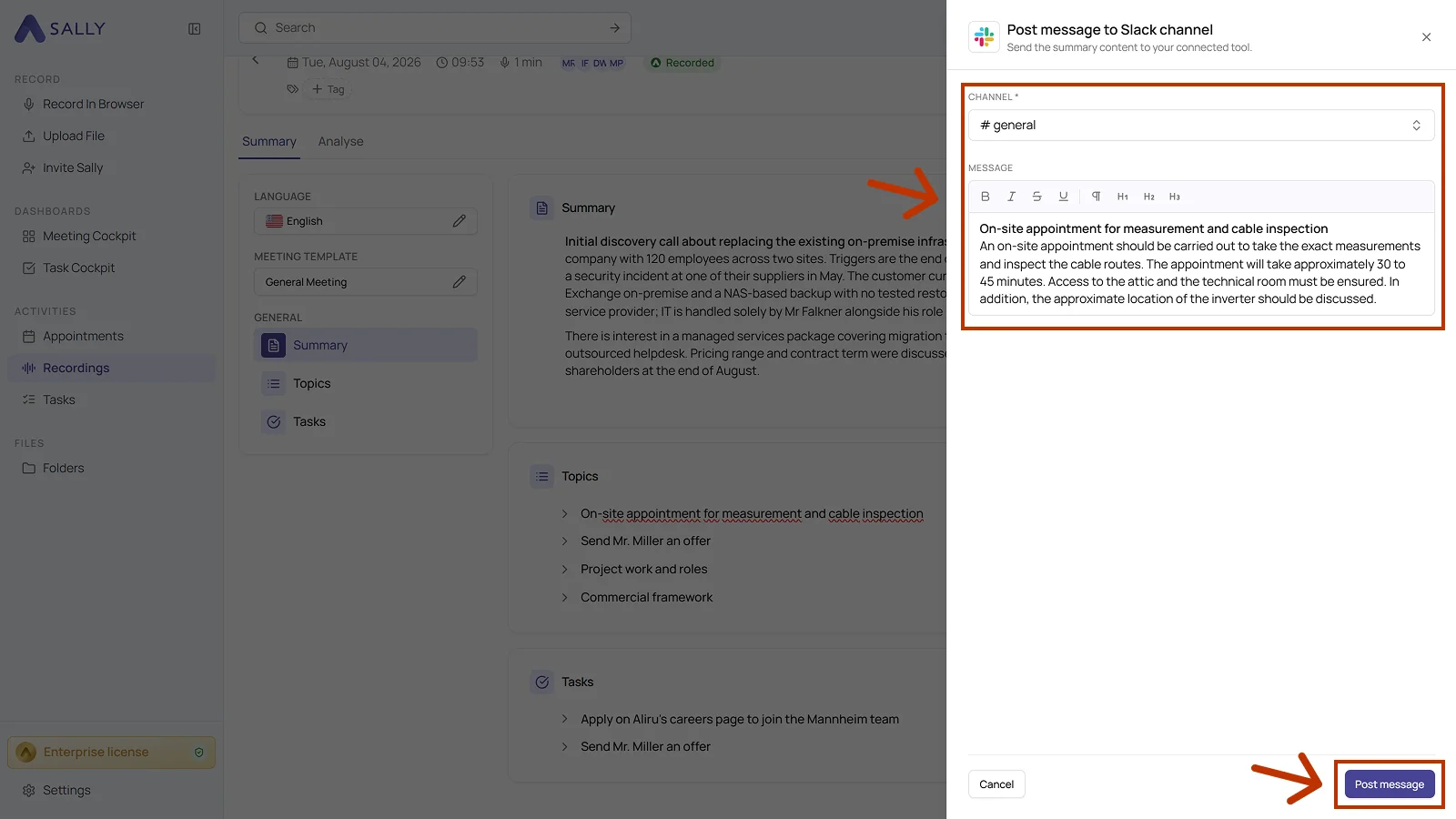
- The message appears in the channel you picked.
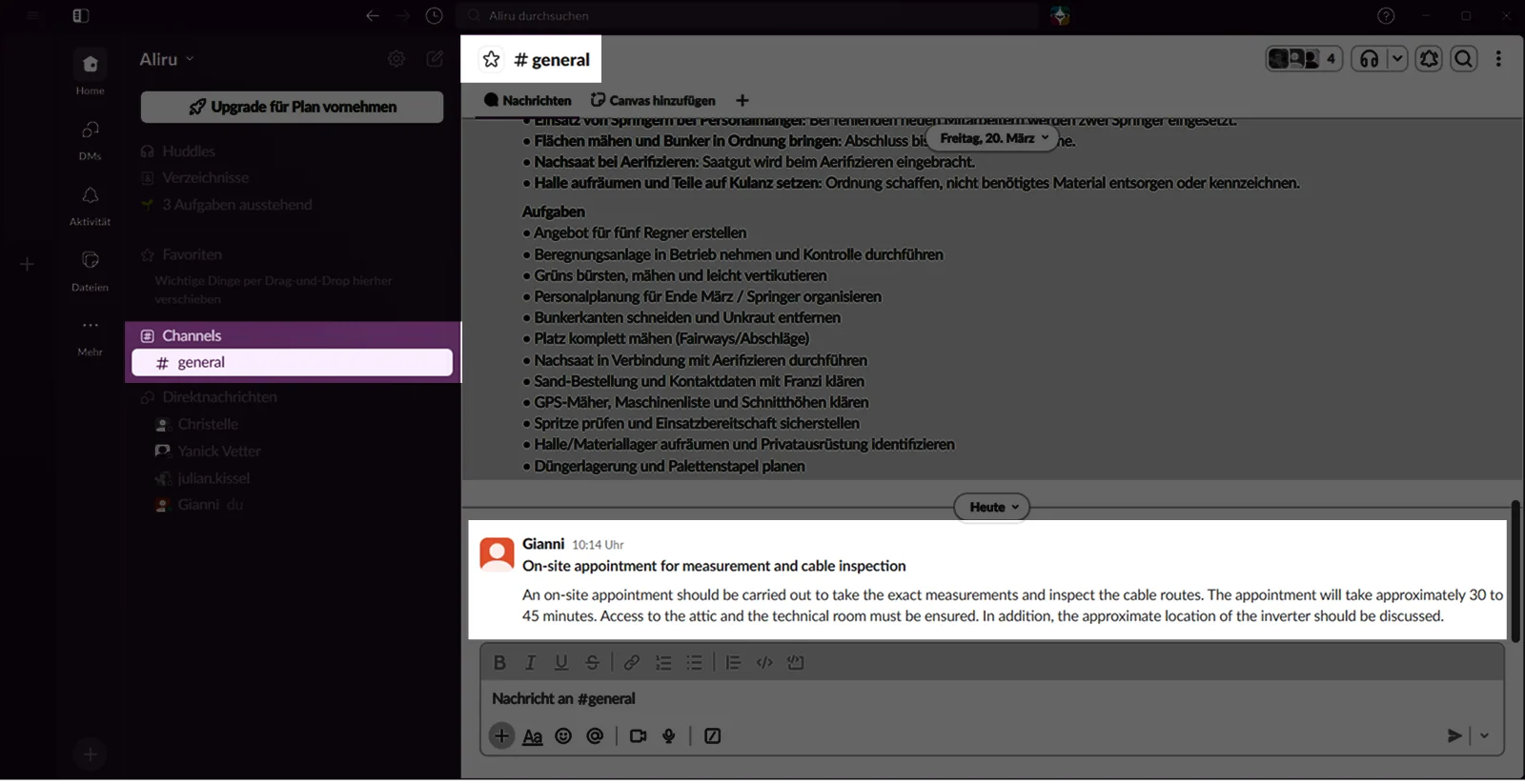
Use channel messages to share decisions, next steps, or updates with the entire project team.
3. Required OAuth scopes
For the integration with Slack, Sally uses OAuth 2.0 for authorization. The following scopes define which areas Sally can access on behalf of the authenticated user.
Technical overview of required scopes
-
Sally accesses this information solely to technically establish and maintain the connection to the user account.
-
Sally does not make any autonomous changes. Actions are performed exclusively upon the explicit initiative of the user.
-
API endpoints are only called within the scope of an active action initiated by the user within the platform.
| Scope | Type | What Slack technically allows with this scope | How Sally uses this scope |
|---|---|---|---|
chat:write | User | Send messages as the authenticated user | Technically defined within Slack's permission model. Sally does not send messages independently outside explicitly user-initiated actions. |
channels:read | User | View basic information about public channels in the workspace | Part of Slack's permission model. Sally reads channel information solely to populate channel selection within the integration. |
groups:read | User | View basic information about private channels in the workspace | Technically provided for integrations. Sally reads basic information solely for display within the integration. |
im:write | User | Start direct messages with people | Technically defined within Slack's API model. Sally does not start direct messages independently without explicit user action. |
users:read | User | View people in the workspace | Part of the permission model. Sally reads user information solely to populate recipient selection within the integration. |
users:read.email | User | View email addresses of people in the workspace | Technically defined within Slack's model. Sally reads email addresses solely for display and identification purposes within the integration. |